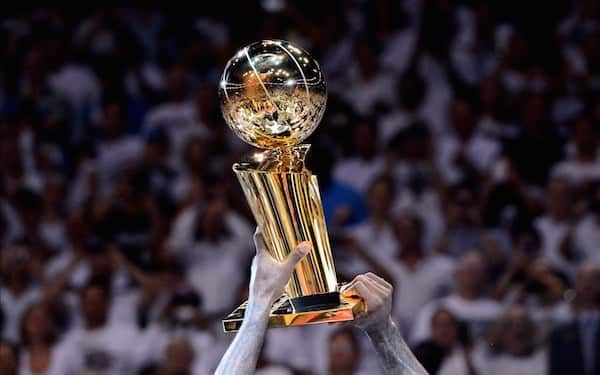
Iconic Rivalries in NBA Finals History: The Matchups That Defined Basketball
TL;DR:
- The Celtics-Lakers rivalry (12 Finals meetings) is the foundation of NBA history, with the Bird-Magic era turning basketball into a national obsession
- The modern equivalent was LeBron vs. the Warriors across four straight Finals (2015–2018)
- Shorter rivalries like Bulls-Jazz, Spurs-Heat, and Pistons-Lakers each left an outsized mark on the sport
Few things in professional sports captivate audiences the way a great rivalry does. In the NBA, the Finals have served as the ultimate proving ground for the game’s greatest competitors. When two teams or two superstars collide on the biggest stage, the result is often history. From the parquet floors of Boston Garden to the gleaming arenas of the modern era, NBA Finals rivalries have produced moments that live on long after the final buzzer.
This guide breaks down the most iconic rivalries in NBA Finals history, examining what made each matchup legendary and why they continue to resonate with fans across generations.
1. Boston Celtics vs. Los Angeles Lakers: The Greatest Rivalry in Finals History
No rivalry in NBA Finals history comes close to matching the longevity and intensity of the Boston Celtics versus the Los Angeles Lakers. The two franchises have met in the Finals 12 times, with the Celtics holding a 9-3 advantage. The rivalry dates back to the Bill Russell era of the 1960s and extends through the Paul Pierce and Kevin Garnett era of 2008 and 2010.
The Russell Era (1959-1966)
Bill Russell and the Celtics dominated the NBA in a way that has never been replicated. Boston faced Los Angeles in the Finals six times between 1959 and 1966, winning every single series.
The matchups pitted Russell’s suffocating defense and team-first mentality against Elgin Baylor’s acrobatic scoring and Jerry West’s clutch shooting. West was so respected as a Finals performer that, despite never winning a championship against Boston, he became the NBA’s logo.
Bird vs. Magic (1984-1987)
The rivalry reached its cultural peak when Larry Bird and Magic Johnson entered the league, transforming basketball into a national obsession. Their colleges had already squared off in one of the most-watched NCAA championship games in history in 1979, and the NBA Finals gave them the ultimate stage.
1984 Finals: Boston defeated Los Angeles in seven games in a physically brutal series. Larry Bird won Finals MVP, averaging 27.4 points per game. Magic Johnson, haunted by turnovers in the final two games, endured sharp public criticism.
1985 Finals: The Lakers responded with a dominant performance, defeating the Celtics in six games. Magic silenced his critics and won his first Finals MVP. At 38 years old, Kareem Abdul-Jabbar was unstoppable.
1987 Finals: The two teams met for the last time in the Finals, with Los Angeles winning in six games. Magic’s iconic junior sky hook in Game 4 remains one of the most celebrated single plays in Finals history.
The Bird-Magic rivalry lifted the entire league. Television ratings soared, shoe deals exploded, and the NBA became a global brand. Without this rivalry, the modern NBA as fans know it would not exist.
2. LeBron James vs. the Golden State Warriors (2015-2018): Four Straight Finals
In the modern era, no rivalry has matched the sustained drama of LeBron James’s Cleveland Cavaliers facing the Golden State Warriors in four consecutive NBA Finals from 2015 to 2018. It is the only time in NBA history that the same two teams have met in four straight Finals.
2015: The Warriors Strike First
Golden State won its first championship since 1975, defeating Cleveland in six games. LeBron James was nearly superhuman in defeat, averaging 35.8 points, 13.3 rebounds, and 8.8 assists per game despite playing without injured starters Kyrie Irving and Kevin Love. The Warriors were led by Finals MVP Andre Iguodala, and Stephen Curry announced himself to the world as something special.
2016: The Greatest Comeback in Finals History
Down 3-1 in the series, LeBron James orchestrated one of the most stunning reversals in sports history. Cleveland won three consecutive games to claim the title, ending a 52-year championship drought for the city of Cleveland. LeBron’s iconic chase-down block on Andre Iguodala in Game 7 is considered one of the defining athletic moments of his career. He and Kyrie Irving both scored 41 points in the deciding game, and LeBron won Finals MVP.
2017: Durant Changes Everything
Kevin Durant joined Golden State in the offseason, and the result was a Warriors team that overpowered Cleveland in five games. Durant won Finals MVP, but the series sparked widespread debate about competitive balance and superteam construction that continues to shape the league’s narrative today.
2018: The Last Chapter
The final meeting saw Cleveland overmatched by an even deeper Golden State roster. The Warriors swept the Cavaliers in four games, with Durant again winning Finals MVP. LeBron James averaged 34 points per game in a losing effort, then departed for Los Angeles in free agency, ending the four-year rivalry.
This rivalry produced the most-watched Finals games of the 21st century and revived national interest in the NBA at a time when league ratings had been inconsistent.
3. Chicago Bulls vs. Utah Jazz (1997-1998): Jordan’s Final Act
While not a multi-decade rivalry, the two Finals meetings between Michael Jordan’s Chicago Bulls and the Utah Jazz in 1997 and 1998 created one of the most compelling short-run storylines in Finals history. Both series went to six games, and both ended with the Bulls winning on Jordan’s final possession.
1997: The Flu Game
Game 5 of the 1997 Finals produced one of Jordan’s most mythologized performances. Playing through what was reported as severe illness, Jordan scored 38 points and hit the go-ahead three-pointer late in the fourth quarter. Scottie Pippen helped carry an exhausted Jordan off the court afterward. The image became one of the most iconic in basketball history.
Karl Malone and John Stockton were the best pick-and-roll combination the game had ever seen. Yet in the clutch moments of both Finals, Jordan found a way to be decisive when it mattered most.
1998: The Last Shot
Game 6 of the 1998 Finals provided the perfect coda to the Jordan era in Chicago. With the Bulls trailing Utah by one point with under 20 seconds remaining, Jordan stripped the ball from Karl Malone, drove the length of the floor, and nailed the championship-winning jumper over Bryon Russell. Jordan held his follow-through pose as the ball fell through the net, delivering Chicago its sixth title in eight years.
The back-to-back series against Utah gave Jordan’s Bulls dynasty a worthy final opponent and ensured that his championships were earned against legitimate resistance.
4. San Antonio Spurs vs. Miami Heat (2013-2014): A Tactical Masterpiece
The two Finals meetings between the San Antonio Spurs and the Miami Heat in 2013 and 2014 are widely regarded as the most tactically sophisticated Finals matchups in recent history. The series pitted Gregg Popovich’s brilliantly constructed Spurs system against Erik Spoelstra’s Heat, featuring LeBron James, Dwyane Wade, and Chris Bosh.
2013: Ray Allen’s Miracle
Miami entered 2013 trailing 3-2 in the series, and with seconds remaining in Game 6 and the Heat on the brink of elimination, LeBron James’s three-point attempt rimmed out. Ray Allen, a former Celtic, retreated to the corner, caught the rebound, and sank a tying three-pointer that sent the game to overtime. Miami won in overtime and went on to win Game 7, denying San Antonio what appeared to be a certain championship. It remains the most dramatic Finals moment of the decade.
2014: Spurs Redemption
San Antonio returned the following year and delivered what many analysts consider the single greatest team performance in Finals history. The Spurs averaged 108.4 points per game across the series, moving the ball with a fluidity and precision that left observers breathless. Finals MVP Kawhi Leonard was spectacular, and veteran Tim Duncan, playing in his fifth Finals, finally silenced any lingering doubts about his legacy. San Antonio won in five games.
The contrast between the two series created a compelling narrative arc. Heartbreak in 2013 gave way to a masterclass in 2014, making this two-year rivalry a study in resilience, execution, and the long memory of elite competitors.
5. Detroit Pistons vs. Los Angeles Lakers (1988-1989): The End of One Era, the Start of Another
The 1988 and 1989 NBA Finals served as a generational handoff. In 1988, the Lakers defeated the Detroit Pistons in seven games to win back-to-back championships, with James Worthy earning the Finals MVP award. Magic Johnson’s Lakers team, built on the Showtime fast break and championship pedigree, looked untouchable.
In 1989, the rematch produced a completely different result. The “Bad Boys” Pistons, led by Isiah Thomas, Joe Dumars, Bill Laimbeer, and Dennis Rodman, swept the Lakers in four games. Los Angeles was hampered by injuries to Magic Johnson and Byron Scott, but the Pistons’ suffocating physical defense was the defining story. Detroit’s willingness to batter opponents and play on the edge of the rules helped dismantle one of the most glamorous dynasties in NBA history.
The two Finals meetings cemented the Pistons as legitimate champions and closed the Showtime chapter of Lakers basketball, setting the stage for the Jordan era that would follow.
6. Golden State Warriors vs. Cleveland Cavaliers (2015-2018): Why This Rivalry Matters for the Future
The four-year Warriors-Cavaliers rivalry did more than produce memorable games. It reshaped how the league thinks about roster construction, the value of three-point shooting, player movement, and superteam dynamics. The debate over Kevin Durant’s move to Golden State altered the public conversation about athlete loyalty and competitive fairness in ways that continue to shape how fans evaluate players’ decisions today.
The rivalry also produced a new generation of basketball fans. Millennials and younger viewers who grew up watching LeBron James against the Warriors now constitute a significant portion of the NBA’s core audience. The storytelling, social media engagement, and globally broadcast Finals games of this era expanded the league’s reach into markets it had never fully penetrated.
Why NBA Finals Rivalries Matter Beyond the Scoreboard
Great rivalries serve a purpose that goes beyond wins and losses. They give fans a reason to care across years and decades. They create shared cultural reference points. They generate the kind of sustained emotional investment that turns casual viewers into lifelong fans.
The Celtics-Lakers rivalry introduced millions of Americans to professional basketball in the 1980s. The Jordan-Jazz series gave the sport a mythology. LeBron versus the Warriors gave the streaming generation its defining sports narrative.
Each of these rivalries also pushed the players involved to achieve more than they might have otherwise. Larry Bird has said that competing against Magic Johnson drove him to prepare harder than any other factor in his career. LeBron James has cited his Finals losses as the crucibles that shaped his development. Competition at the highest level produces excellence, and the NBA Finals deliver that competition year after year.
Frequently Asked Questions
What is the most storied rivalry in NBA Finals history? The Boston Celtics versus the Los Angeles Lakers, with 12 Finals meetings, is the most storied rivalry in NBA Finals history. Their clashes in the 1960s and 1980s are considered foundational to the league’s identity.
How many times did LeBron James face the Golden State Warriors in the Finals? LeBron James faced the Golden State Warriors in four consecutive NBA Finals from 2015 to 2018, winning once (2016) and losing three times.
What was the most dramatic single game in NBA Finals rivalry history? Game 6 of the 2013 NBA Finals, featuring Ray Allen’s corner three-pointer to tie the game for Miami against San Antonio with five seconds remaining, is widely considered the most dramatic single game in recent Finals history.
Did the San Antonio Spurs and Miami Heat only meet twice in the Finals? Yes, San Antonio and Miami met in the Finals in 2013 and 2014. Despite being only two series, the tactical quality and emotional storyline created one of the most compelling short-run rivalries in Finals history.
Who has appeared in the most NBA Finals? Bill Russell and the Boston Celtics hold the record for most Finals appearances by a single franchise, reaching the championship series 21 times. Among individual players, LeBron James has appeared in 10 NBA Finals.
Conclusion: The Legacy of NBA Finals Rivalries
The NBA Finals have given fans some of the most enduring rivalries in American sports history. Whether it is the decade-spanning battles between Boston and Los Angeles, the electric short-run drama of LeBron versus Golden State, or the tactical elegance of San Antonio and Miami, each rivalry has added something permanent to the fabric of basketball culture.
These matchups remind fans that greatness is not defined in isolation. Jordan needed Malone and Stockton to provide worthy resistance. Bird needed Magic to push him further than comfort ever could. LeBron needed the Warriors dynasty to reveal the full measure of his determination.
The rivalries of the past have set a standard for what the NBA Finals can be. As new stars rise and new dynasties form, the next iconic rivalry in Finals history is already taking shape. And when it arrives, it will carry the weight of everything that came before it.
Related Articles
- NBA Finals Records: Most Points, Assists, and Rebounds of All Time
- Greatest NBA Finals Performances by Individual Players of All Time
- How the NBA Finals Changed the Game of Basketball
- The Best NBA Finals Games of All Time: Classic Matchups That Defined Basketball History
- The History of the NBA Finals: Key Moments and Milestones
Recent Posts
- How to Buy Sold-Out Harry Styles Tickets for the “Together, Together” MSG Residency
- Philadelphia Phillies 2027 Schedule: Opening Day and Key Series
- Garth Brooks Washington, D.C. Tickets: 2026 Dates and On-Sale Details
- How to Buy 2026 US Open Tickets After Play Begins
- Dinosaur Jr. “There Near” Tour 2026-2027: Full Tour Dates, Setlist Predictions & How to Find Cheap Tickets