The History of the NBA Finals: Key Moments and Milestones
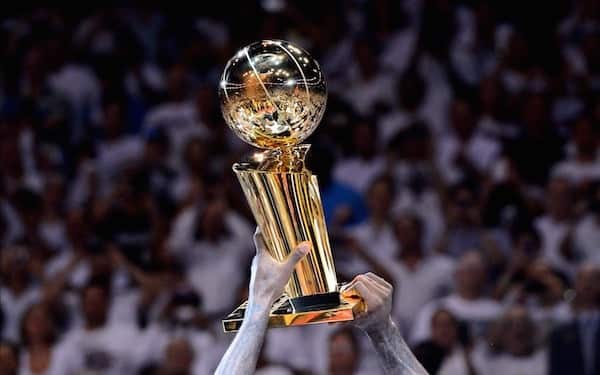
The NBA Finals are the pinnacle of professional basketball. Every June, two conference champions battle for the Larry O’Brien Championship Trophy, carrying decades of legacy with them onto the court.
From the earliest days of the Basketball Association of America to the global spectacle it is today, the history of the NBA Finals is a story of dynasties, upsets, and unforgettable performances. Here is a look at the key moments and milestones that have defined the biggest stage in basketball.
The Origins: How the NBA Finals Began
The NBA Finals traces its roots to 1947, when the Basketball Association of America (BAA) held its first championship. The Philadelphia Warriors defeated the Chicago Stags four games to one to claim the inaugural title. The BAA merged with the National Basketball League in 1949 to form the National Basketball Association, and by 1950, the NBA Finals as we know it was officially underway.
In those early years, the format shifted several times. Best-of-seven series, best-of-five matchups, and even round-robin formats were all tried before the league settled into the familiar best-of-seven structure that remains standard today. These early Finals were sparsely attended and rarely televised, a far cry from the billion-dollar broadcast events the championship has become.
The Minneapolis Lakers and the First Dynasty (1949-1954)
The Minneapolis Lakers, led by Hall of Fame center George Mikan, became the first true NBA dynasty. Mikan was so dominant that the NBA briefly widened the lane to limit his effectiveness.
The Lakers won five championships in six years, establishing a template for what a championship franchise could look like. Mikan’s size, skill, and leadership set an early standard for big men in the league that players would chase for generations.
The Boston Celtics Era: The Greatest Dynasty in NBA History (1957-1969)
No conversation about the history of the NBA Finals is complete without the Boston Celtics of the Bill Russell era. Under coach Red Auerbach, the Celtics won 11 championships in 13 years, including eight consecutive titles from 1959 to 1966.
Russell, a five-time MVP and defensive revolutionary, anchored a roster that included Bob Cousy, Sam Jones, and John Havlicek. Their rivalry with the Philadelphia Warriors (later 76ers) and Wilt Chamberlain produced some of the most compelling Finals matchups of the era. The 1969 NBA Finals, in which the aging Celtics defeated the Los Angeles Lakers in seven games, remains one of the most dramatic championship series in league history.
The 1980s: Magic, Bird, and the Golden Age of Rivalry
The NBA Finals regained its cultural foothold in the 1980s largely because of two players: Earvin “Magic” Johnson and Larry Bird. Their rivalry, born in the 1979 NCAA Championship game, carried over to the professional stage and transformed the league’s popularity.
The Los Angeles Lakers and Boston Celtics met in the Finals three times during the decade (1984, 1985, and 1987), reigniting one of sport’s greatest franchise rivalries. Magic’s Showtime Lakers, featuring Kareem Abdul-Jabbar and James Worthy, won five titles in the 1980s. Bird’s Celtics claimed three. Their head-to-head battles drew record television ratings and helped the league sign a landmark broadcast deal with CBS that set the foundation for the NBA’s modern media dominance.
One defining moment came in Game 4 of the 1984 Finals, when Bird called out his teammates for their lack of physicality against the Lakers, sparking a Celtics comeback that turned the series. Another came in Game 6 of the 1987 Finals, when Magic hit a now-legendary “baby hook” over two Celtics defenders to seal a Lakers win. These Finals did not just decide champions. They shaped basketball culture.
Michael Jordan and the Chicago Bulls Dynasty (1991-1998)
If the Celtics defined the 1960s and the Lakers defined the 1980s, then the 1990s belonged entirely to Michael Jordan and the Chicago Bulls. Chicago made six NBA Finals appearances in eight years and won all six, never losing a Finals series while Jordan was on the roster.
The Bulls’ two three-peats (1991-1993 and 1996-1998) cemented Jordan as the greatest player of his generation and arguably the greatest of all time. Alongside Scottie Pippen and coached by Phil Jackson, Jordan averaged 33.6 points per game across his six Finals appearances.
Milestones came fast during this run: the iconic 1992 Finals “shrug” after a record-tying six first-half three-pointers against Portland, the “Last Dance” 1998 Finals in which Jordan hit a pull-up jumper over Bryon Russell to clinch the title, and six consecutive Finals MVP awards that remain unmatched.
The 2000s: Shaq, Kobe, and a New Era of Greatness
The Los Angeles Lakers carried the torch into the new millennium with their own three-peat (2000-2002), this time powered by Shaquille O’Neal and a young Kobe Bryant. O’Neal’s three-peat Finals MVP performances were among the most dominant individual runs in Finals history.
The 2004 Finals brought a stunning upset when the Detroit Pistons defeated the heavily favored Lakers four games to one, proving that team basketball could dismantle individual stardom.
That same era saw the San Antonio Spurs, led by Tim Duncan, emerge as one of the most consistent franchises in Finals history, winning four titles between 1999 and 2007. Duncan’s quiet excellence and the Spurs’ system-first approach offered a counterpoint to the star-driven model that dominated headlines elsewhere.
LeBron James and the Modern Finals (2011-Present)
No active player has shaped the modern NBA Finals more than LeBron James. James has appeared in ten NBA Finals across four different franchises, winning four championships. His Finals performances include some of the most statistically dominant games in the event’s history, including a 27.5 points, 10.9 rebounds, and 8.9 assists per game average in 2016.
The 2016 NBA Finals stand as one of the greatest series ever played. James’s Cleveland Cavaliers became the first team in Finals history to overcome a 3-1 deficit, defeating the Golden State Warriors in seven games. LeBron’s chase-down block on Andre Iguodala in the final minutes of Game 7 is widely considered one of the greatest individual plays in Finals history.
The Warriors’ dynasty of the mid-2010s, built around Stephen Curry, Klay Thompson, and Draymond Green, produced four championships between 2015 and 2022 and appeared in five consecutive Finals from 2015 to 2019. Curry’s three-point shooting and pace-and-space revolution changed how teams approach the Finals on both ends of the court.
Key Milestones at a Glance
Some numbers that capture the scale and history of the NBA Finals:
- The Boston Celtics hold the record for most championships with 17 titles.
- LeBron James holds the record for most Finals appearances by an individual player with ten.
- Bill Russell won the most championships as a player with 11.
- Phil Jackson holds the record for most championships as a head coach, with 11.
- The 2016 Finals remain the only time a team has come back from a 3-1 deficit to win the championship.
Why the NBA Finals Still Captivates
More than 75 years after the first championship game, the NBA Finals remain one of the most-watched sporting events in the world. What makes it endure is not just the basketball. It is the storylines, the individual battles, the dynasties that rise and fall, and the moments that transcend sport. From George Mikan to Giannis Antetokounmpo, from the Boston Garden to Chase Center, the Finals have always been where legends are made.
Whether you are a lifelong fan or just discovering the game, understanding the history of the NBA Finals means understanding the history of basketball itself.
Related Articles
Recent Posts
- The Chicks ‘Taking the Long Way’ 20th Anniversary Tour Dates, Presales, and How to Find Cheap Tickets
- Gracie Abrams’ 2026 Look at My Life Tour: Dates, Presales, and How to Find Cheap Tickets
- Kehlani World Tour 2026: Dates, Presales & How to Find Cheap Tickets
- Where To Get Cheap Sports Tickets
- Where Can I Find Tickets for NBA Playoff and Finals Games?