

The Event Marketing Timeline: How to Promote Your Event Week by Week
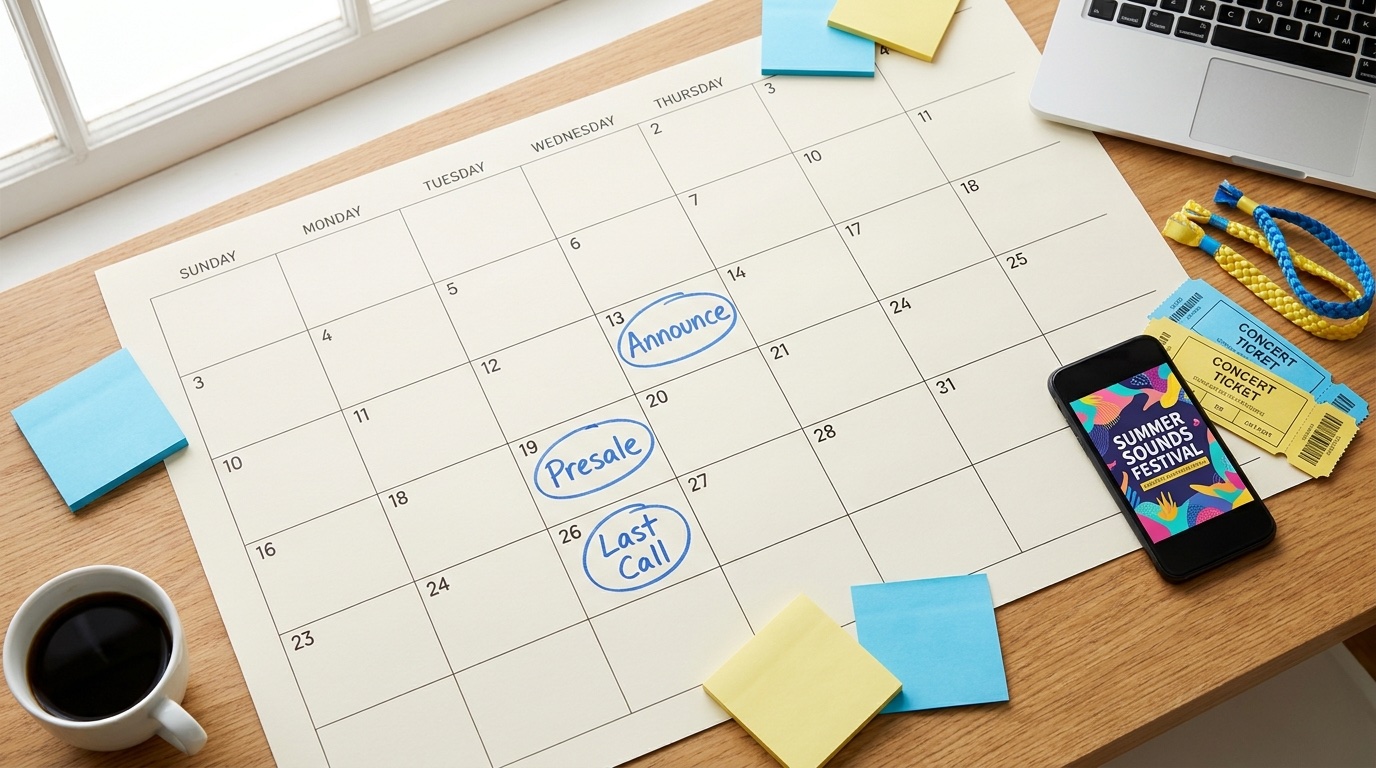
Most events sell in a U-shape: a burst when tickets go on sale, a long quiet middle, and a spike at the end when the deadline gets real. Your marketing timeline has one job: make the first spike bigger, keep the middle from flatlining, and make sure the final spike doesn't depend on luck.
The plan below assumes roughly 12 weeks from announcement to doors, which fits most club shows, one-day festivals, and mid-size conferences. Running shorter? Keep every phase and compress the middle; the order matters more than the exact week numbers.
One thing this guide assumes you've already done: your pricing and tiers are set. If they aren't, start with our guide on how to price event tickets, because a promotion calendar built on a broken price structure just gets you to "no" faster.
Weeks 12+: Build before you announce
The most common promotion mistake isn't starting too late; it's announcing with nothing behind the announcement. Before you say a word publicly, have ready:
- Event page: name, date, venue, price, and a working buy button
- Asset kit: key art, social crops, a 15-second video, copy blocks
- Email list: past buyers and followers, segmented if you can
- Announce partners: artists, speakers, venue, and press briefed with assets
The email list is the one organizers skip. Announcement day performance is mostly a function of how many people you can reach directly in hour one; social algorithms decide the rest, and you don't control them.
Never announce before tickets are purchasable. Hype with no buy button is demand you paid for and then handed to whatever your audience got distracted by next.
Weeks 12 to 9: Announce and open strong
Announce everywhere at once: email first, then socials, partners, and press within the hour. Fragmented announcements ("date today, lineup next week, tickets soon") burn three news moments to get one spike.
Open with your early bird tier live. The discount gives your most committed fans a reason to buy today instead of someday, and those early sales are the social proof everything else builds on. Ask every artist, speaker, or partner on the bill to post within 24 hours; their audiences are warmer than any cold-ad audience you can buy.
Close the phase by enforcing the early bird deadline. Sell out the allocation or hit the date and move on. Extending it teaches your audience that your deadlines are decorative.
Weeks 8 to 5: Survive the middle
This is where sales go quiet for almost every event, and where most organizers either panic or disappear. Do neither. The middle phase is a content cadence problem:
- Drop planned news: hold back something from announcement (a lineup addition, a special guest, a schedule or set-times reveal) and release it here as a genuine second news moment
- Publish proof: aftermovies, testimonials, behind-the-scenes builds, artist interviews. Show the event is real and worth leaving the house for
- Email every 10 to 14 days: each send tied to a news item or piece of content, never a bare "tickets still available"
- Start paid retargeting: people who visited the event page but didn't buy are your cheapest conversions; run them continuously from here to doors
Check weekly sales against the curve you sketched at on-sale. Quiet is normal; behind is a signal. If you're genuinely behind pace, fix it with a news moment and targeted offers (presale codes, group rates), not a public discount that punishes everyone who already bought.
Weeks 4 to 2: Turn on urgency
Inside a month, your buyer changes. Early buyers bought on excitement; late buyers buy on logistics and fear of missing out. Your messaging should shift with them: less "look how great this is," more "here's exactly what to expect, and it's filling up."
Make the standard-to-final tier change loudly ahead of time; a price deadline is the single most effective urgency lever you have, but only if people know it's coming. Post real scarcity milestones when you hit them (75% sold, GA nearly gone), widen paid spend beyond retargeting to lookalike audiences, and make one more pass at partners for a second post.
Final week: Last call
The last week routinely sells 15 to 30% of the room, so run it like a campaign of its own. Send a last-call email 5 to 7 days out, another at 48 hours, and a final "doors are tomorrow / today" send. Post daily. Answer every DM and comment fast, because at this range every unanswered question is an abandoned cart.
Then aim the machine at the people who already bought: know-before-you-go logistics, set times, parking. Attendees who feel taken care of show up, post, and hand you the content that sells the next event.
Frequently Asked Questions
How early should I start promoting my event?
For most ticketed events, go on sale 10 to 12 weeks out. Big-commitment events like festivals and conferences need 4 to 6 months; a local show with a defined audience can work on 6 weeks. Announce when you can sell, not before.
What should I do if ticket sales stall in the middle?
First check whether you are actually behind your expected curve, since almost every event goes quiet mid-cycle. If you are, create a real news moment (a lineup addition, a special guest, a schedule reveal) and put paid spend behind it rather than discounting the ticket.
How often should I email my list?
Roughly every 10 to 14 days through the middle of the cycle, weekly inside the final month, and 2 to 3 sends in the last week. Every email needs a reason to exist beyond reminding people you are still selling tickets.
Promotion is a calendar, not a burst of inspiration. Build everything before you announce, launch loud with email first, feed the quiet middle with planned news moments and retargeting, and let real deadlines (not discounts) drive the final push.
Related Posts
Where to List Your Event for Free (and Where Not to Bother)
Most free event listing sites sell zero tickets. Here are the ones worth your time, what each actually costs once you read the fine print, and how to prove which one sold a ticket.
The Last-Minute Ticket Sales Playbook
The final week isn't a rescue mission, it's your main sales window. Here's a day-by-day plan to sell out the last seven days without gutting your price.
How to Build an Email List That Sells Out Events
Your email list is the only sales asset you keep when a platform changes its terms. Here's how to build one from every visit, order, and door interaction.