

Door Sales Done Right: The Box Office Guide for Independent Events
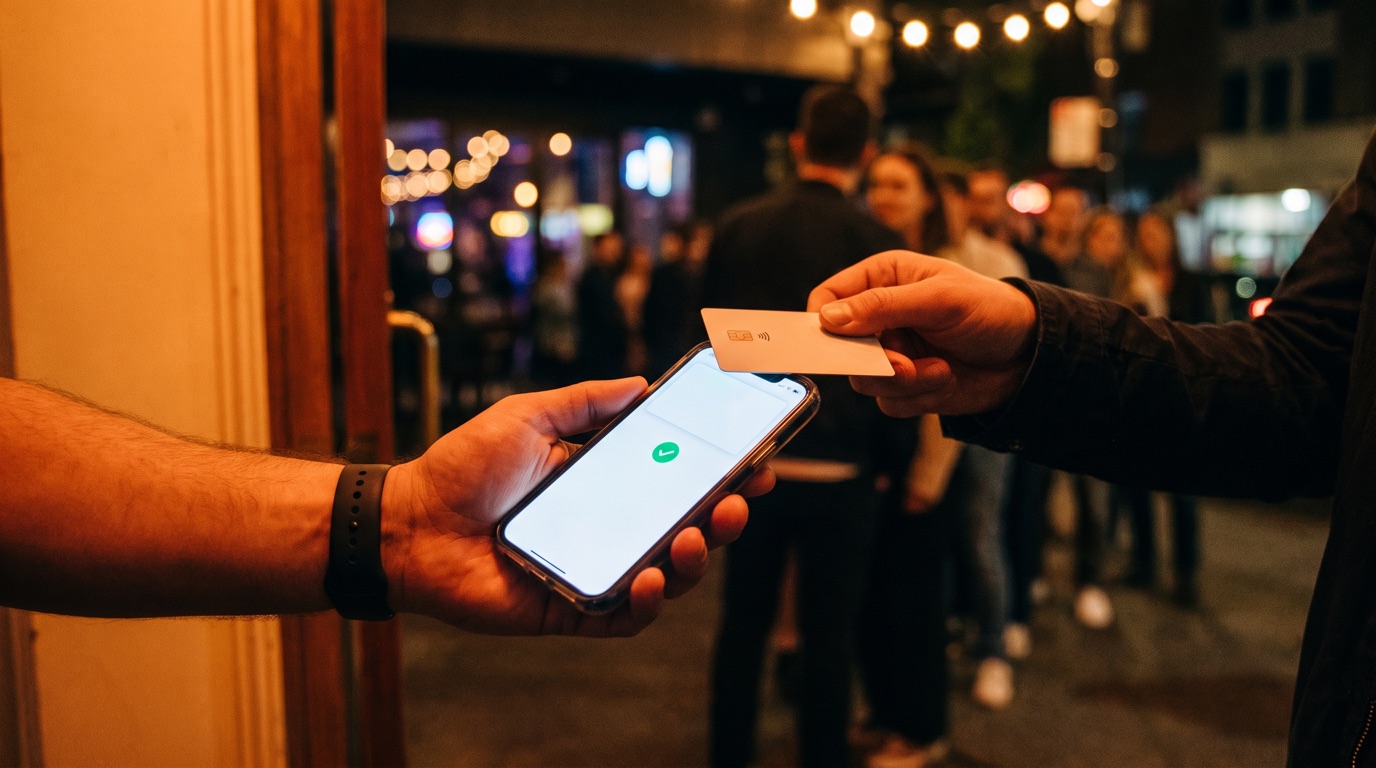
The door is the last place your event makes money and the easiest place to lose it. For club nights and comedy shows, the door still moves a meaningful share of the house, commonly something like a tenth to a third of your tickets, which means a real chunk of your revenue arrives as loose bills at 11pm, handled by someone you hired an hour ago, in a dark room, with a line building. That's the setup for the most common way independent events leak cash, and almost nobody plans for it the way they plan advance sales.
Most "box office" advice is written for venues with a permanent ticket window and a full-time house manager. That's not you. You're running a pop-up gate at a rented room, or a fold-out table at the front of a comedy club, and the box office is a phone, a float of twenties, and whoever you trust to run it. The good part is that the same discipline that makes a big venue's box office trustworthy scales all the way down to that table, and most of it is decisions you make before doors, not scrambling you do at them.
This is the walk-up guide for independent organizers: what to charge at the door, how to take payment without a cash-handling nightmare, how to set up door-only tickets so walk-ups land in the same system as everyone else, and how to reconcile the night so your sold count, your scanned count, and your cash all agree. It pairs with the event check-in mechanics that keep the same door moving fast.
Should door tickets cost more than advance tickets?
Yes, price the door above your advance price in almost every case. The standard move is a $5 to $10 premium, which usually works out to somewhere between 20 and 33 percent higher than what early buyers paid. A $20 advance ticket becomes $25 at the door; a $30 becomes $35 or $40. The premium does two jobs at once: it rewards the people who bought early and handed you cash flow and a reliable headcount, and it gives the maybe-crowd a concrete reason to commit before the day of the show instead of waiting to see how they feel.
That second effect is the one operators underrate. When advance and door cost the same, you've told every fan there's no penalty for deciding at 9pm, so a big share of them do, and you spend your planning cycle blind to your own attendance. A visible door premium moves demand forward, which is worth more than the extra few dollars per walk-up.
| Advance price | Typical door price | Premium |
|---|---|---|
| $15 | $20 | +$5 (33%) |
| $20 | $25 | +$5 (25%) |
| $30 | $35 to $40 | +$5 to $10 |
| $50 | $60 | +$10 (20%) |
There's one real exception. If the show is soft and you'd rather have a full room than a protected price gap, drop the premium and say so in your promotion. A comedy room that lives on the bar tab wants butts in seats more than it wants an extra five bucks on thirty walk-ups. That's the same margin logic behind running a comedy show that actually makes money, where the door is a means to the two-drink minimum, not the main event. Know which kind of night you're running before you set the number.
Cap your door inventory on purpose. Set a door-only allotment (say, the last 40 tickets) so the room can genuinely sell out and "sold out in advance, no door" becomes a real marketing line for next time. Scarcity you can prove beats scarcity you claim, and a hard advance cutoff trains your regulars to buy early for the show after this one.
Take cards at the door, not just cash
Card should be the default payment at your door, and cash the fallback. A modern box office and door sales tool turns an ordinary phone into a tap-to-pay terminal: it reads contactless cards and phone wallets with no dongle, no card reader to charge and lose, and no separate device to reconcile. The guest taps, the sale lands in the same live sold count as an online order, and you never touch a bill.
Cards win on three fronts that all matter at a busy door. They're faster than counting change back to someone under a loud PA. They leave a transaction record, so the money is accounted for the instant it's taken instead of at 2am when you're counting a shoebox. And they remove the single biggest source of door shrinkage, which is cash that's hard to trace once it's in a human's hand. A tap-to-pay sale is self-documenting in a way a twenty in a drawer never is.
Keep a cash float anyway, because a few guests will always show up with only bills, and a broken card connection shouldn't stop the door cold. But treat cash as the exception lane. The mistake is running the whole door on cash because "everyone has cash," then discovering the count is $180 short and having no way to tell whether that's theft, a comp you forgot, or a miscount. When most sales run on card, the cash you do handle is a small, checkable pile instead of the whole night's take.
Cash is where the money leaks
Every dollar of door cash needs a record, and the record can't be the memory of the person holding the box. This is the part organizers skip and the part that costs them, because cash skimming at the door is quiet, common, and nearly impossible to prove after the fact if you didn't set up controls before doors.
Start with a float you count and write down: a fixed amount of small bills (a couple hundred dollars in fives and tens is typical for a mid-size room) handed to the box office at the start of the night. At the end, the cash in the drawer should equal the float plus the system's recorded cash sales. If you sold 25 cash tickets at $25 through the system, the drawer should be up exactly $625 over the float. When that number has to reconcile against something, skimming stops being a free action and becomes a variance someone has to explain.
The second control is individual logins. Give each door worker their own scanner PIN on their own phone rather than one shared account, the same move that lets you staff multiple check-in lanes without a bottleneck. Now every sale and every scan ties to a person. If the cash is short or a count looks wrong, you can see which station it came from instead of shrugging at a group of five people who all had the login. It also means you're not handing your master account to a volunteer.
Reconcile cash against the system during the night, not just at the end. If your live dashboard says 40 cash sales but the drawer only holds 30 tickets' worth over the float, you want to catch that at 10:30pm while the person who ran that window is still standing there, not at closeout when everyone's gone home. A mid-night spot check is the cheapest theft deterrent you have, and it doubles as an early warning that a device stopped syncing.
Set up door-only ticket types before doors
The cleanest door runs on ticket types you built in advance, not on someone improvising prices at the table. Create a door-only ticket type at your walk-up price and keep it hidden from your public event page, so it exists in the system for the box office to sell but never confuses online buyers or undercuts your advance push. When a walk-up pays, your staffer picks that type, takes the tap, and the sale is a real ticket with a QR code that flows through the same scanned count as everything else.
This solves the reconciliation problem at the source. A door sale that goes through the system is inventory-aware (it counts against your capacity), it's attributed to the right price, and it shows up in your reports next to advance sales instead of as a mystery pile of cash you back into later. Compare that to the old way, a roll of paper tickets or a hand-tallied clicker, where the door total is a guess and the capacity count drifts out of sync the moment the room gets busy.
Kiosk mode is the upgrade when volume justifies it. Put a phone or tablet in a locked-down self-serve mode at the front so guests can buy their own door ticket by tapping a card, the same way they'd order at a fast-casual counter. It turns a staffing problem into a fixture: one worker can supervise two or three kiosks instead of personally running every transaction, which is how a small team handles a surge without hiring a second cashier. Set a sale alert so the organizer's phone buzzes as the room fills and you know when door volume is spiking without hovering over the table.
Before doors, confirm: a hidden door-only ticket type exists at your walk-up price; every box office phone has tap-to-pay enabled and tested with one real card; each worker has their own scanner PIN; the cash float is counted and written down; and one person owns the end-of-night reconciliation. Five minutes of setup replaces an hour of arguing over a shoebox at 2am.
Reconcile the night so three numbers agree
A door is run right when your sold count, your scanned count, and your cash all reconcile at closeout. Those three numbers are the whole audit. Tickets sold (advance plus door) should match tickets scanned plus legitimate no-shows. Cash in the drawer should match the float plus recorded cash sales. When they line up, you know the money is all there and the headcount is real.
When they don't, the gap tells you where to look. More scanned than sold means people got in unscanned or on duplicated codes, a door-control problem. More sold than scanned by a wide margin during the surge means a scanner stopped syncing or someone's waving people through. Cash short against recorded sales points at the drawer. Because each transaction is tied to a worker and a station through their PIN, you're diagnosing a specific window, not the whole night.
The platform economics matter more here than they look. Some door tools charge a per-scan fee, a per-device fee, or a monthly box office add-on, which taxes exactly the high-volume, low-price walk-up events that need the feature most. On TickPick, door sales, tap-to-pay, scanner PINs, and kiosk mode are part of the same 5 percent plus payment processing you pay on advance tickets, with no monthly SaaS fee and no per-device charge, so scaling your door from 30 walk-ups to 300 doesn't add a line item. And because those tickets sell into a marketplace with millions of active buyers, more of your inventory tends to move in advance in the first place, which is the cheapest door of all: the one people already walked through online.
Frequently Asked Questions
Should door tickets cost more than advance tickets?
Yes, in almost every case. Price the door $5 to $10 above your advance price, which usually lands around 20 to 33 percent higher. The premium rewards the fans who bought early and gave you cash flow and a headcount, and it nudges the fence-sitters to commit before the day. The only time to skip the premium is a soft-selling show where you'd rather fill the room than protect the gap.
Can I take card payments at the door with just a phone?
Yes. Modern box office tools turn a phone into a tap-to-pay terminal that reads contactless cards and mobile wallets with no extra hardware, and the sale drops straight into your live sold count. Cards are faster than making change, they leave a record you can reconcile, and they remove the cash-handling risk entirely. Keep a small cash float for the few guests who only carry bills, but make card the default path.
How do I prevent cash theft at the door?
The fix is a record for every dollar, not trusting the person holding the box. Sell through a system so each transaction is logged, push card payments so most sales never touch cash, give each worker their own scanner PIN instead of a shared login, and count the float in and the drawer out against the system's cash total. When the numbers have to agree at the end of the night, skimming stops being easy.
Door sales can be anywhere from a tenth to a third of the tickets for club and comedy events, and they're the leakiest cash you handle, so run the door like a real box office even when it's a phone and a float. Price the door $5 to $10 above advance, make tap-to-pay the default and cash the exception, build a hidden door-only ticket type so walk-ups land in the system, and give every worker their own scanner PIN. Then reconcile three numbers at closeout: sold, scanned, and cash. When they agree, the money's all there. Do that and the door stops being the hole in your night and starts being the last easy sale.
Related Posts
How to Stop Scalpers at Your Event
You can't make an event scalper-proof, but you can make your tickets a bad target. Here's what actually works, from a company that grew up in resale.
Event Permits and Insurance: What US Organizers Need
A permit costs less than you fear and takes longer than you think. Here's which events trigger one, what the paperwork actually runs, and the insurance a venue will make you carry.
How Many Security Guards Does Your Event Need?
The planning rule is one guard per 50 to 100 attendees, tighter with alcohol. Here's how to size the number for real, what it costs in 2026, and when the venue decides for you.