

Event Staffing: How Many People You Need and What to Pay
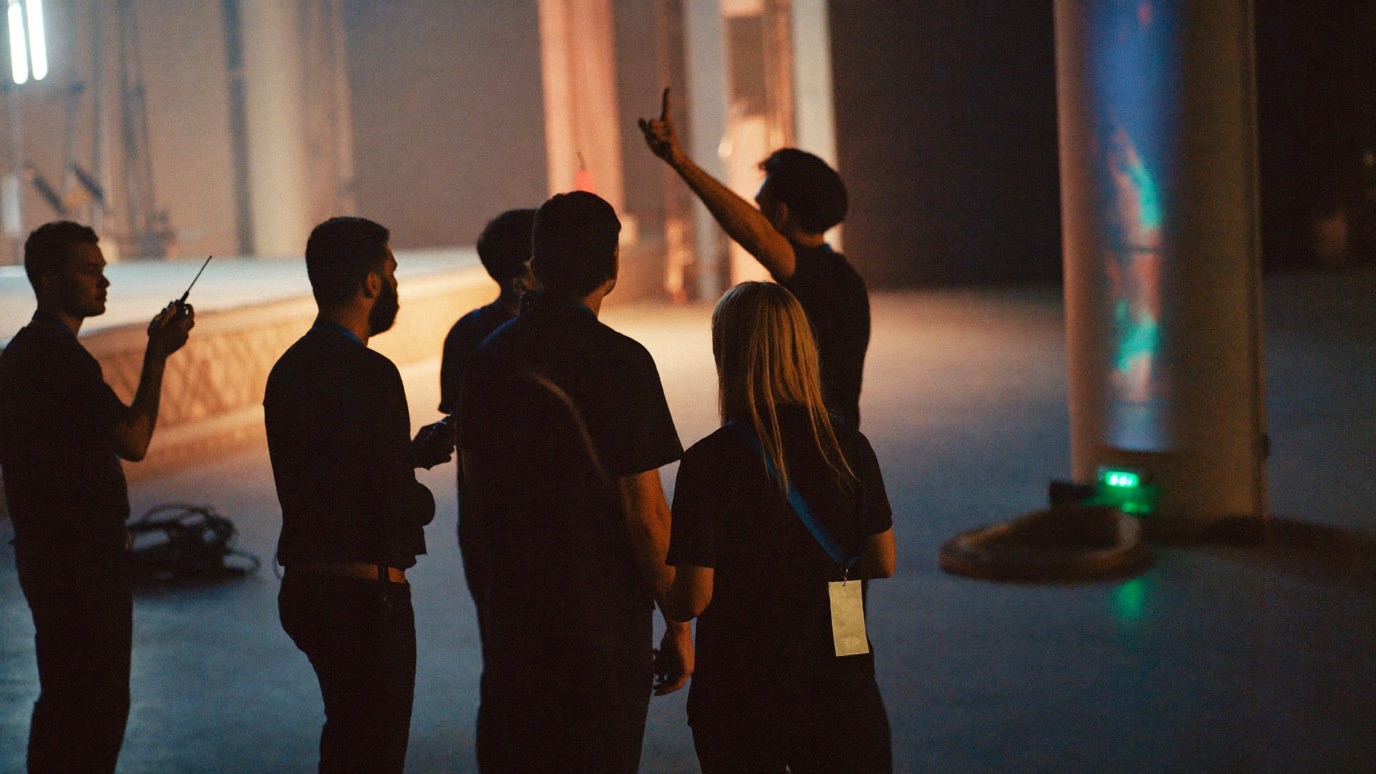
Event staffing is a sizing problem you can solve on paper before you hire anyone: figure out the peak load on each job, staff that job to its own number, then give every person only the access their job needs. Most understaffing isn't a budget failure. It's a planning failure, where someone staffed the door to the average of the night instead of the worst ten minutes of it, and the line out front paid for the mistake.
The trick is that your team is not one number. It's a handful of separate jobs that scale on different things. Your door scales with how fast people arrive. Your security scales with a headcount ratio and your risk profile. Your bar scales with service points and drink volume. Your production crew barely scales at all, because a stage needs the same hands whether 200 or 2,000 people watch it. Staff each of those to its own peak and the total takes care of itself. Pick one blanket ratio for the whole room and you'll overpay for calm jobs and underpay for the crunch.
This guide covers the six role groups nearly every ticketed event needs, how many people each one takes at different sizes and event types, what those people cost in 2026, when a volunteer beats a paid hire and when it quietly costs you more, and the day-of setup that keeps your count honest without handing a stranger the keys to your whole dashboard.
What roles does an event team need?
Almost every ticketed event runs on the same six role groups, and the only thing that changes with size is how many of them collapse onto one person. At a 150-cap club night, one capable manager might cover the lead, the floor, and half the door. At a 3,000-cap festival, each of these is a department with its own supervisor. The roles don't disappear at small scale, they just stack.
- Door and check-in. Scanning tickets, running walk-up sales, and searching the guest list. This is the job that makes or breaks the first impression, and it's the one that scales fastest with arrival speed.
- Floor and ushers. Wayfinding, seating, restroom and exit direction, and keeping crowd flow moving. Low-skill, high-visibility, and the first thing you cut when you're wrong about the budget.
- Security. Licensed, insured guards sized by ratio and risk, not vibes. This is its own discipline with its own math.
- Bar and concessions. Only if you're serving, but when you are, it's often your largest single team and your biggest revenue driver after tickets.
- Production and stage crew. Load-in, load-out, audio, lighting, and stage management. Fixed by the show, not the headcount.
- Lead or event manager. The one person watching the whole board, making the call when two problems hit at once. Never skip this to save a shift.
The mistake isn't usually forgetting a role. It's assuming one warm body covers two of them at peak. A scanner who's also checking wristbands and IDs isn't one worker doing three jobs, it's one lane running at a third of its speed. Separate the jobs that collide during the surge, and combine only the ones that never peak at the same time.
How many staff do I need for a 500-person event?
Plan on roughly 8 to 22 people for a 500-cap event, and where you land in that range is decided by whether you're seated or standing and whether there's a bar. A seated daytime event is calm, controlled, and dry, so it sits at the low end. A late-night standing event with alcohol lights up every role at once: more door lanes for the surge, tighter security, and a full bar team. Here's how a 500-cap night pencils out across the event types independent organizers actually run:
| Event type (500 cap) | Rough total staff | Where the bodies go |
|---|---|---|
| Seated daytime (conference, comedy matinee) | 8 to 12 | 2 door, 3 to 4 ushers, 1 to 2 security, AV, 1 lead |
| Standing show / mid-size concert | 14 to 18 | 3 to 4 door, floor team, bar, security at 1 per 50 to 75, stage crew, lead |
| Club night with a bar | 16 to 22 | heavy bar, tightest security, coat check, 3 to 4 door, promoters, lead |
| Food festival (outdoor) | 12 to 18 | entry lanes, roaming floor, vendor liaison, light security, lead |
Read those as peak-staffing counts, not averages, because the whole point is to survive the worst moment. Two of those role groups have real formulas behind them, and it's worth using the actual math instead of eyeballing. Your door count comes from arrival throughput: a trained scanner moves about six to ten people per minute, so a room that fills in a tight window needs more lanes than the same room that trickles in. The check-in lane math turns your peak arrivals and your door window into an exact lane count, and it's the single most useful number in this whole exercise because a blown door is the failure your guests photograph.
Security runs on the other formula. The planning standard is one guard per 50 to 100 attendees, tighter with alcohol, standing room, and late hours, plus fixed posts for doors, VIP, and cash. That's a full sizing discipline of its own, so rather than repeat it here, our breakdown of how many security guards your event needs has the ratio table, the risk adjustments, and the 2026 guard rates. Size security from that, size the door from throughput, and staff the remaining roles to the table above.
Weight your door team toward the front of the night, then let it float. The same people who scan four lanes during the 45-minute arrival crush don't all need to stand at the door once the room is full. Brief your scanners that they roll to the floor or the bar backup once the surge clears, and you buy peak-window coverage without paying for eight people to watch an empty entrance at midnight. One team, two shifts of purpose.
How much do event staff get paid?
Budget by role, because the spread is wide and a blended "event staff" number will burn you. Here's where the national market sits in 2026, pulled from current salary data. Treat these as base planning ranges and expect high-cost metros like LA, NYC, and SF to run 20 to 40% above them.
| Role | 2026 hourly (national) | Notes |
|---|---|---|
| General event staff / ushers / ticket takers | $15 to $20 | Most common front-of-house hire |
| Bartender | $14 to $18 base | Tips push effective pay to $25 to $40+ on a busy night |
| Stagehand / load-in crew | $18 to $24 | Skilled, often through a labor call or local union |
| Unarmed security guard | $25 to $40 | Higher in big metros; see the security guide |
| Supervisor / lead | Add 15 to 25% | Over the relevant base rate |
According to ZipRecruiter and Salary.com data, general event staff and ushers average in the mid-teens to low twenties per hour, bartenders carry a low base that tips do the real work on, and stagehands land around $18 to $24. Two structural costs turn those hourly numbers into a real budget. First, most event labor runs a minimum shift, usually about four hours, so a three-hour show still bills four. Second, staff hours run longer than event hours: crew arrives before doors for load-in and a briefing and stays past close for load-out, so a four-hour event is often a six-hour labor bill per person.
Put it together for that 500-cap standing show. Sixteen staff averaging a $22 blended rate across a six-hour call runs about $2,100 for the night, before any tip pool or supervisor premium. That's a fixed cost that hits before a single ticket is scanned, which is exactly why staffing belongs in your break-even math from the first budget draft, not as a line you back into afterward. If you're still working out whether the event clears at all, our look at what actually makes events profitable shows where a fixed labor line like this sits against the margins for your event type.
Volunteers, contractors, or employees?
Match the staffing model to the risk of the job, not to what's cheapest on the spreadsheet. Volunteers genuinely work for low-risk, low-skill roles at community and cause events: greeters, wayfinding, merch table, program handouts. The trade is real, though. Volunteers are less reliable on the day, you can't discipline a no-show, and the moment a role involves money, alcohol, or a safety call, a volunteer becomes a liability instead of a saving. Never put an unpaid, untrained person on the door cash, behind the bar, or in a security role. That's where an insurer draws its line, and where a friendly favor turns into an uninsured incident.
Most independent organizers land on a mix: a small paid core of leads and skilled crew, contracted specialists for security and sometimes bar and production, and paid hourly staff for the front-of-house roles that scale with the crowd. Contractors carry their own insurance and licensing, which is the entire point of hiring a security firm rather than staffing guards yourself. The classification matters legally too. If you're setting schedules, providing the tools, and directing the work minute to minute, that person is likely an employee under most state tests, not a contractor, and misclassifying to dodge payroll taxes is a bet that gets expensive when a claim gets filed.
The setup that works is unglamorous: pay your core, contract your risk, and keep volunteers off any role where a no-show costs you a lawsuit instead of a slightly slower line.
The day-of runbook: staff the night, then lock the access
Give every person a written role, a reporting line, and exactly the system access their job requires, then hold a single briefing before doors. A great staffing plan falls apart at 7:45pm when nobody knows who calls the capacity hold or which lane handles problem tickets, so the runbook is the thing that turns a headcount into a team. Write a one-page run-of-show with call times, each person's post, the escalation chain, and the two or three decisions that need a named owner: who stops entry at capacity, who authorizes a comp at the door, who talks to the fire marshal.
The access piece is where organizers quietly leak control. You do not hand a volunteer you met an hour ago your master login. On TickPick, Team & Roles gives you seven scoped roles you assign per event, so a door worker sees the scanning view and nothing else, a bar lead sees what they need, and your financials and settings stay yours. Pair that with Scanner PINs so each door worker scans on their own phone under their own PIN: several lanes run at once, every scan is attributed to a person, and if a count looks wrong you can see which lane and which worker to check. That attribution is the same door discipline that keeps comp tickets and a guest list from quietly reopening a room you already sold.
Watch scanned-versus-sold live during the surge, not in the morning. If you sold 500 and you're 40 minutes into doors with only 180 scanned but the room feels full, someone is waving people through unscanned or a device isn't syncing. Assign one person to watch that running count on the organizer app and nothing else during peak. A live headcount is your earliest warning for both a leaking door and a technical failure, and it's the number a fire marshal will ask you to prove.
Debrief while it's fresh. The fifteen minutes after load-out, when you note which lane clogged, who you'd rehire, and where you were a body short, is worth more than any planning template, because your own event is the only staffing data that's actually about your crowd. Recurring organizers who write that down after every night stop re-guessing the same numbers and start staffing from what happened last time.
Frequently Asked Questions
How many staff do I need for a 500-person event?
Plan on roughly 8 to 22 people for a 500-cap event, depending on type. A seated daytime conference or comedy matinee lands near 8 to 12: a couple of door scanners, a few ushers, light security, and AV. A standing show or club night with a bar climbs to 16 to 22 because the bar, the security ratio, and the door all scale up at once. Size each role to its own peak load rather than picking one blanket number for the room.
What roles does an event team need?
Almost every ticketed event needs six role groups: door and check-in (scanning and walk-up sales), floor and ushers (wayfinding, seating, crowd flow), security (licensed guards sized by ratio), bar and concessions if you serve, production and stage crew, and a lead or manager coordinating the night. Small events collapse several of these onto one person; large events split each into its own team with a supervisor.
How much do event staff get paid?
In 2026, general event staff, ushers, and ticket takers run about $15 to $20 an hour nationally, bartenders earn a $14 to $18 base that tips push to $25 to $40+ on a busy night, and stagehands and load-in crew run $18 to $24. Unarmed security is higher at $25 to $40. Leads and supervisors add 15 to 25% over the base rate, and most staffing runs a minimum shift of about four hours.
Don't staff to one blanket ratio. Size each job to its own peak: the door from arrival throughput, security from the 1-per-50-to-100 ratio plus fixed posts, the bar from service points, and production from the show. A 500-cap event runs 8 to 12 people seated and dry, 16 to 22 standing with a bar. Budget $15 to $20 an hour for front-of-house staff in 2026, $18 to $24 for stagehands, $25 to $40 for unarmed security, add 15 to 25% for leads, and remember the four-hour minimums and the pre- and post-event hours. Pay your core, contract your risk, and keep volunteers off cash, bar, and security. Then scope every person's access to their role and watch your scanned-versus-sold count live, because a plan that survives contact with the door is the only one that matters.
Related Posts
Comp Tickets and Guest Lists Without Bleeding Revenue
Comp tickets aren't free giveaways, they're a marketing spend measured in seats. Cap them at a few percent of the house, track every one, and read what they return.
How to Stop Scalpers at Your Event
You can't make an event scalper-proof, but you can make your tickets a bad target. Here's what actually works, from a company that grew up in resale.
Door Sales Done Right: The Box Office Guide for Independent Events
For club nights and comedy shows, a large share of tickets still sell at the door, and that's the leakiest cash in your whole operation. Here's how to price it, take cards, and keep the count honest.