

Halloween Event Planning: How to Sell Out October
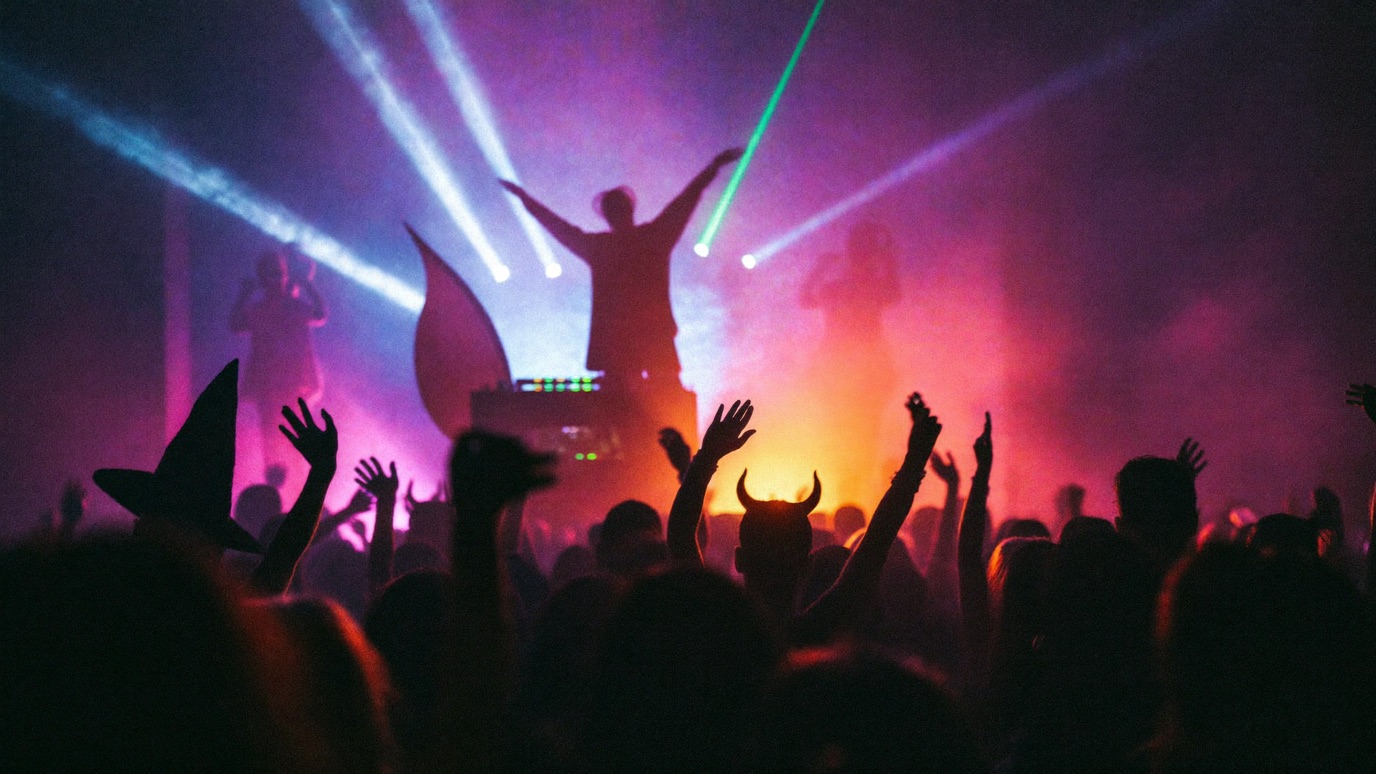
Halloween falls on a Saturday in 2026, and that single fact should change how you program October. In a Tuesday-Halloween year, promoters fight over the weekend before and the night itself is a half-empty afterthought. This year demand stacks on October 30 and 31, back to back, and the right response is almost never "raise prices on one night." It's "add a night."
The demand is measurable. The National Retail Federation's 2025 survey, run with Prosper Insights & Analytics across 8,045 consumers, put total Halloween spending at a record $13.1 billion, up from $11.6 billion the year before, with per-person spending at $114.45. Two lines matter if you sell tickets: 32% of consumers planned to throw or attend a Halloween party, and 24% planned to visit a haunted attraction.
Be careful with that 32%, because it isn't your addressable market. Most of it is house parties, and a friend's living room is free. What it tells you is that a third of adults have committed the night to a party, and a fan who's decided to celebrate is far easier to sell than one you have to talk into leaving the house. The 24% is the cleaner number, since visiting a haunted attraction means buying a ticket.
So you're not creating demand in October. You're competing for someone who already decided to go out, already paid for a costume, and is choosing between you, four other events, and that free party at a friend's place. Most of winning that happens before Labor Day.
The 2026 calendar is most of the strategy
Program two nights, not one, and not three unless you've sold out before. The Friday and Saturday of Halloween weekend are separate markets with separate buyers.
| Date | Day | What it's actually good for | Pricing posture |
|---|---|---|---|
| Oct 23 to 24 | Fri, Sat | Early-costume crowd, cheaper venue and talent, peak haunt season | Standard weekend pricing |
| Oct 30 | Fri | The overflow night. Buyers who work Sunday, and the 21-to-25 crowd going out twice | 10 to 20% under Saturday |
| Oct 31 | Sat | The main event. Highest ceiling of the year outside NYE | Premium, tiered, add-ons |
| Nov 1 | Sun | Nothing, unless it's a day party or brunch with a hard 8pm end | Cheap, low expectations |
The weekend-before problem is the one that catches people. When Halloween lands midweek the party weekend genuinely shifts earlier, and a promoter who books the 31st gets punished. In 2026 the opposite holds: October 24 is a real but secondary market, mostly haunted attractions and family programming. If you only have budget and staff for one event, put it on Saturday the 31st and don't overthink it.
Two nights works because the incremental cost is low and the incremental audience is not. The creative, the vendor list, and the door plan are already built. What kills the second night is treating it as leftovers, so give Friday its own reason to exist: a different DJ, a lower-stakes open contest, a lineup that skews local.
One thing has to happen before any of that, and if you're reading this in August it's already late: lock the room. Venues allocate and price their October 31 dates earlier than any night except New Year's Eve, and the good rooms in a competitive market are committed by late summer. If you don't have a signed date, that's this week's job rather than September's, and what you can get reshapes the plan. A venue that will only give you Friday means Friday is your main event, priced and programmed like one instead of as the discount night.
The demand data, and what to do with it
The 49% early-shopping number is your deadline. The 32% party number is your competition as much as your market, because most of those parties are free.
NRF found 49% of consumers begin Halloween shopping in September or earlier. That's costumes and decorations, not tickets, but the two run on the same clock: someone who buys a vampire costume on September 12 has already decided where they're wearing it. If your event isn't announced when that decision gets made, you're the second choice.
Costume spending is the other half of the picture, and it caps your pricing. Adults spent about $2 billion on their own costumes in 2025, out of $4.3 billion total. A fan who just dropped $60 on an outfit has less room for a $75 ticket than the same fan on a normal Saturday. I'd rather sell 400 at $45 with a $20 coat-check-and-skip-line add-on than 250 at $70.
Save the NRF figures with their source and use them when you pitch a venue or sponsor for October dates. "A third of adults plan to throw or attend a Halloween party, and per-person Halloween spending hit a record $114.45 last year" is the line that gets a bar to hand you a Saturday. Quote it the way NRF wrote it, "throw or" included. A venue GM who catches you inflating one number stops believing the rest of the deck.
On-sale timing: announce by the first week of September
Announce and open sales in the first week of September. By August, the national bar crawl operators already have October 31, 2026 dates live and selling in Pittsburgh, Chicago, Charlotte, Houston, and New York.
That's your competitive floor, not your target. Those operators list early across dozens of cities and let SEO do the work for two months. You can't out-spend them, but you can out-time them locally, and the general logic of when to put tickets on sale holds with October compressing everything: the announcement spike is the only free reach you get, so it has to land while people are searching.
A runway that works for a club night or costume party:
- Early September: announce, open an early tier, publish the themed event page with date, venue, costume policy, and contest rules already written. September searchers want to know if there's a contest and whether they can wear a mask.
- Late September: early tier closes on a date, not a quantity. General admission opens.
- Mid October: the paid push, and your cost per ticket climbs every week from here because every promoter in your city is bidding.
- The last seven days: where most of your volume lands regardless. The last-minute ticket sales playbook matters more in October than any other month, because Halloween buyers sit on the decision until they know where their friends landed, often Thursday.
Move your costume theme earlier than feels natural. If there's a theme beyond "wear a costume," publish it in September so people can build for it. A theme announced in mid-October is a theme nobody dresses for.
Costume contests that actually sell tickets
A costume contest drives presales only when entering requires an action before the door. Announced from the stage at 11pm, it's a nice moment. Built into checkout, it's a conversion mechanic.
The version that works: add a free contest-entry option in checkout, so anyone who wants to compete registers when they buy. One checkbox gives you three things. A segment of buyers emotionally committed to showing up, a judging headcount in advance, and a list you can text in the final week.
Then make the prize worth building for. A $500 cash prize costs you about seven tickets at $70, or eleven at $45, so if it moves thirty it paid for itself several times over. Cash also photographs better than a bar tab in the recap video. Split it across three or four categories rather than one grand winner, because a single top prize convinces most of the room they can't win, while "best group," "best homemade," "scariest," and "best last-minute" feels winnable to four different types of people.
Two details get skipped. Announce the judging time on the event page and hold it, because a contest at 10:30pm pulls people in early and keeps them past the point they'd have left, while one that slips to 12:45am trains them not to believe you next year. And shoot it properly: those photos are the top of your funnel for next October, the same compounding logic behind a real Instagram posting system rather than a flyer dump.
Pricing: tiers, add-ons, and where the ceiling actually is
Halloween supports higher prices than a normal Saturday, but the ceiling is lower than promoters assume, because the costume already took a bite out of the night's budget. Get the extra revenue from add-ons, not from the base ticket.
| Tier | Timing | Example price | Why it exists |
|---|---|---|---|
| Early | Sept, closes on a date | $25 | Cash flow, plus proof to the venue and sponsors |
| General | Oct 1 onward | $40 | The volume tier that fills the room |
| Final release | Last 7 days | $50 | Captures the late deciders without discounting |
| Door | Night of | $55 | Should be your highest price, always |
| VIP or table | Whole runway | $150 and up | Groups, bottle service, guaranteed seating |
The escalating structure works on Halloween because the deadline is real. A fan can talk themselves out of a random Saturday, but not out of the only Halloween there is, and early-bird pricing that escalates on published dates turns that urgency into September cash flow instead of leaving it on the table.
Add-ons are where October is unusually generous, and coat check is the one nobody prices properly. Costumes come with jackets, wigs, and bags, and across most of the country October 31 is cold enough that people arrive in a layer they don't want to dance in. A $5 coat check on 600 attendees is $3,000, two staff for five hours takes maybe $250 of that, and you were probably providing the service free anyway. Skip-the-line is the second one. Halloween door lines move slower than any other night in my experience, because masks and elaborate costumes slow the ID check, so $15 to skip a queue you know will exist is real value rather than a manufactured upsell.
On what you keep: TickPick Organizer is 5% plus payment processing, with no monthly fee, which on a $40 ticket is $2 plus processing rather than the flat-fee-plus-percentage stacks that make a busy October look better on the ticket count than in the bank account.
Haunted experiences need timed sessions, not general admission
Any walk-through, maze, or haunted-house format should sell timed entry in slots. General admission on a capacity-constrained attraction produces a two-hour line, a bad review cycle, and a hard revenue ceiling.
The math is simple. If your attraction safely absorbs 40 people every 15 minutes, that's 160 an hour and 800 across a 6pm-to-11pm night. As general admission, everyone shows up between 8pm and 9:30pm, you turn people away, and you cap out well under 800. Sold as 15-minute slots with sessions and timeslots, you discount the 6pm and 10:30pm windows, price the 8pm to 10pm peak higher, and staff to a known curve instead of guessing.
Commercial haunts run it this way for capacity reasons rather than sophistication: timed entry is the only way to sell a fixed footprint more than once in a night, and the mechanic works the same in a leased warehouse. It's worth stealing even if you aren't running a haunt, since a multi-room party with a photo activation can sell entry windows and move more capacity than the room holds at once.
The October operations that break events
Costumes break your door. Plan for it, publish the rules, and staff up.
Three things go wrong on Halloween that don't go wrong in June. Masks make ID checks slow and awkward, so the policy has to be explicit: face coverings come off at the ID check, no exceptions, and your door staff hears that in the pre-shift. Props read as weapons, and a security setup calibrated for a normal Saturday will either wave through something it shouldn't or start arguments at the front of a 200-person line. And you'll take in far more coats than usual, which is either the add-on revenue above or a pile of jackets in a hallway.
Publish your prop and mask policy on the event page and repeat it in the confirmation email and the day-of text. "No weapons, real or fake, including toy guns, swords, and bats. Masks must be removed at ID check." A fan who drove 40 minutes in a costume built around a prop they can't bring in becomes a refund request and a one-star review. One who read the rule at checkout just leaves it at home.
Week-of communication is where this gets enforced, and October rewards texting over email because the audience is deciding late. Doors, set times, prop policy, and the judging time in one day-of message to your buyer list, under the consent and 10DLC rules that govern event SMS, does more for your night than another round of ads.
Frequently Asked Questions
When should I announce a Halloween event?
Announce and open sales in the first week of September at the latest. NRF's 2025 survey found 49% of consumers start Halloween shopping in September or earlier, and by August the national bar crawl operators already have their October 31 dates on sale. Late September is survivable with a strong list, but you'll pay for the delay in ad costs, bidding against every promoter in your city during the last three weeks.
What Halloween events make the most money?
A costume party or club night on Halloween night itself has the highest revenue ceiling, because fans accept premium pricing on the one night they've already bought an outfit for. Timed-entry haunted experiences have the better margin profile, since 15-minute slots push more people through a fixed footprint and let you charge more for the 8pm to 10pm peak. The worst use of October is a single general-admission event on the weekend before, in a year when Halloween is a Saturday.
How do costume contests increase ticket sales?
Only when entry requires an action before the door. Put a free contest-entry add-on in checkout so competitors register when they buy, then text that group in the final week. Pre-registration gives you a list of people committed to showing up and a judging headcount in advance, and it converts the contest from a mid-party announcement into a reason to buy early.
Lock your October 31 room now, because the good ones go by late summer. Halloween 2026 is a Saturday, so program Friday the 30th and Saturday the 31st as two events with two reasons to exist, and skip the weekend before unless you're running a haunt. Announce and open sales in the first week of September, since half of Halloween shoppers are already shopping by then. Build the costume contest into checkout as a free registration add-on, split the prize across four categories, and hold the judging time you published. Keep the base ticket at $40 to $50 and take the upside in coat check, skip-the-line, and tables. Sell any capacity-constrained attraction in timed slots with peak pricing. Then publish the mask and prop policy everywhere a buyer will see it, because the refund requests all come from that one rule nobody read.
Related Posts
The NYE Event Playbook: The Biggest Night in Nightlife
New Year's Eve is the one night fans expect to pay triple, and the one that punishes you hardest for guessing. Here's the pricing, the open-bar math, the on-sale runway, and the January play that turns a one-night crowd into a list.
The Post-Event Follow-Up Playbook: Your Next 72 Hours
The 72 hours after your event is the cheapest sale you will ever run. Here's the hour-by-hour follow-up plan that books your next date before the glow fades.
Audience Segmentation for Events: Stop Blasting Everyone
One message to your whole list underperforms with your best buyers and burns the newest ones. Here are the five segments worth building and what to send each.