

The NYE Event Playbook: The Biggest Night in Nightlife
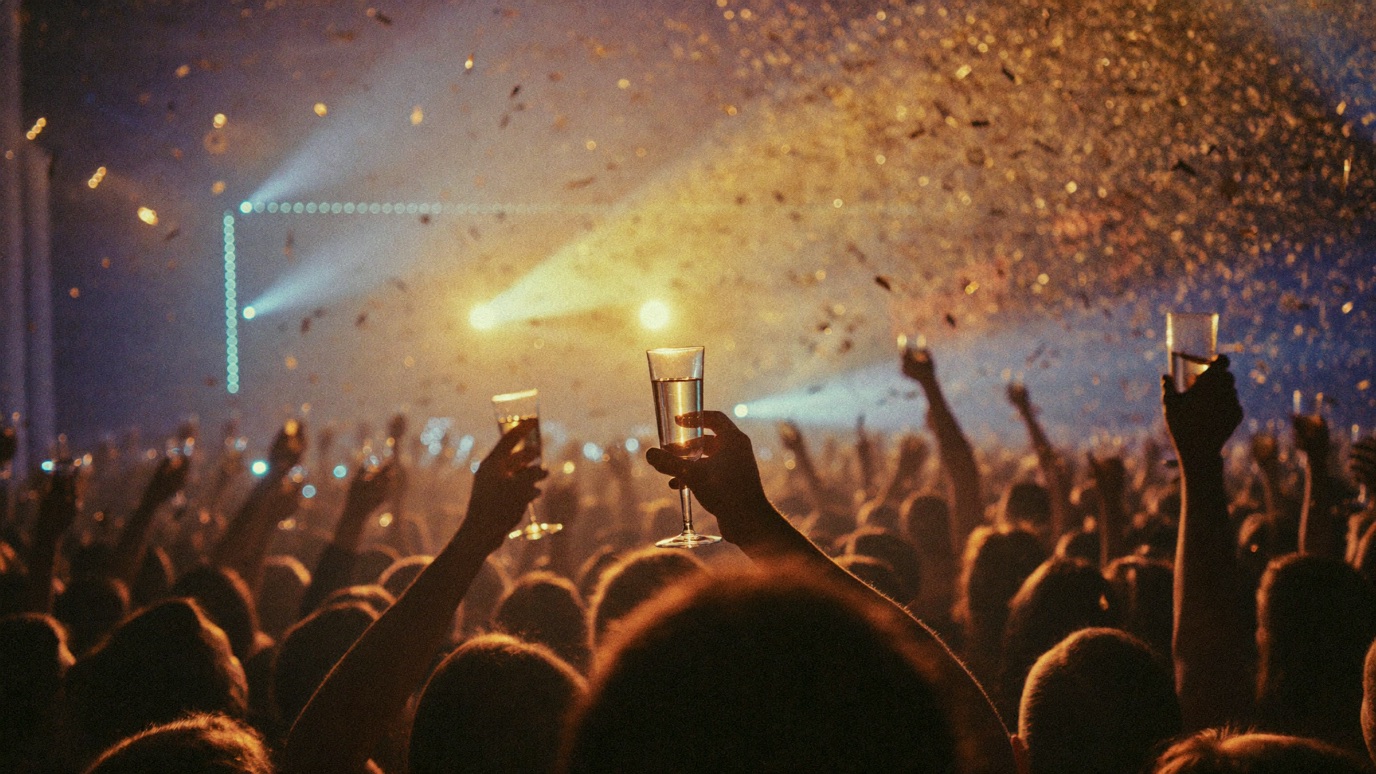
New Year's Eve is the single highest-ceiling night a promoter gets, and the only one where a fan walks through the door already braced to pay triple. That psychology is real money: the same crowd that balks at a $25 cover in March will hand over $90 for December 31 without blinking, because the night has no substitute and everyone has already decided they're going out. The flip side is that NYE punishes a miscalculation harder than any other date. Your venue, your talent, and your bar commitment all lock in weeks before you know how the room fills, and a soft NYE doesn't just underperform, it burns the one night of the year you can't run again next Saturday.
The 2026 wrinkle is the calendar. December 31 lands on a Thursday, which sounds like a downgrade from a weekend NYE and mostly isn't, because January 1 is a federal holiday. Nobody's setting a 6am alarm. The night behaves like a Saturday with a built-in recovery day, so the usual "it's a school night" drag on a Thursday event doesn't apply. What does change is the shape of the weekend around it: you get a clean single-night event instead of the two-night programs that a Saturday NYE invites, and the people deciding between your party and a flight out of town have made that call by mid-December. Plan for one big night done right, not a Friday-and-Saturday spread.
Four decisions separate a NYE that clears a profit from one that just looks busy: how you price the premium without hitting the ceiling, whether an open bar is your revenue or your cost, when you open sales against an immovable deadline, and what you do in January with the biggest one-night crowd you'll gather all year. The production side is the same party you already know how to throw. These four are where the margin is won or lost, and most of the economics will feel familiar if you've already worked through the numbers behind a club night; NYE just turns every dial up at once.
How much should NYE tickets cost?
Price your main night 50 to 150 percent above a normal weekend, then take the rest of the upside in tables and add-ons rather than shoving the base ticket into territory your market won't follow. The premium is real but it is not unlimited, and the fastest way to kill an NYE is to read "fans will pay up" as "fans will pay anything."
Here's the market, pulled from what venues across major US cities actually charged for the last New Year's Eve, per nightlife guides tracking NYE ticketing:
| Format | Typical GA or cover | What the price usually buys |
|---|---|---|
| Neighborhood bar, cash bar | $15 to $40 | Entry, party favors, a midnight toast |
| Bar or lounge, open bar | $79 and up | 4 to 5 hours of open bar |
| Nightclub | $79 to $130+ | Entry, headline DJ, cash or partial bar |
| Rooftop | $99 and up | The view, open bar common |
| VIP table, 2 to 6 guests | $299 to $1,000+ | Bottle service, reserved space |
Two things in that table matter more than the numbers. First, the spread between a cash-bar cover and an open-bar ticket is the whole pricing conversation on NYE, and it comes down to the bar question in the next section. Second, the VIP line is where the night's real upside hides. A group that would never pay $90 a head for general admission will happily split a $1,000 table four ways, because on NYE a guaranteed place to stand and a bottle waiting at midnight is the product, not a luxury. Build the tier ladder so the premium is visible and the tables sell themselves.
If you haven't set your anchor price from break-even and local comps yet, do that before you reach for a NYE multiple; how to price event tickets is the prerequisite, and the NYE premium is a markup on top of a real number, not a number you invent because it's December. The ceiling is set by what your specific room and city will bear, and the honest test is whether the premium tier sells out early. If it doesn't, you priced the ego version, not the market version.
Put the biggest group tables on sale first and loudest. NYE groups form early, around who's hosting and where everyone's landing, and that decision gets made in late November and early December while casual buyers are still ignoring the night. A table that sells in week one also gives you a deposit, a guaranteed floor, and proof to the venue that the night is live, which is leverage for everything else you're negotiating.
Do open bar packages make money?
Only when you control the bar economics. This is the decision that separates a profitable NYE from a busy one, and it hinges on a single question most promoters never ask before they print the package: who actually owns the bar?
If you run the bar yourself, or you've negotiated a fixed per-head pour rate with the venue, an open-bar package is one of the best products you can sell on NYE, because people drink hard on New Year's and you've capped your cost per head in advance. If the bar belongs to the venue and you're on a door-only or bar-for-room deal, then an "open bar" is the venue's revenue stream, not yours, and selling it as your package means collecting the money and handing most of it straight back. On that deal you make more selling a-la-carte entry plus paid add-ons and letting the venue keep its bar.
Here's the math that tells you where the line is. Industry planning figures put open-bar cost at roughly $15 to $20 per person for beer and wine, $20 to $35 for a full bar, and $35 to $45 for a premium bar over a standard event window, per catering cost guides. On a consumption basis the average runs about 1.5 drinks per person per hour early, dropping to 0.7 to 0.8 after the third hour, at around $7 a drink. NYE skews heavy and long, so plan the top of those ranges. For an illustrative 400-person night on a five-hour premium open bar:
| Line | Per person | Notes |
|---|---|---|
| Open-bar package price | $120 | What the buyer pays |
| Liquor and mixers | ($42) | Premium tier, heavy NYE pour |
| Bar staff | ($6) | One bartender per 50, five hours |
| Platform fee (5%) + processing | ($10) | TickPick Organizer rate |
| Contribution per head | $62 | Before venue, talent, security |
At 400 guests that's roughly $24,800 of bar contribution on top of whatever the entry itself clears, and it only exists because you owned the pour cost. Run the same package on a venue-owned bar and that $62 is the venue's, not yours. The package was never the lever. Controlling the bar was.
The a-la-carte alternative is cleaner than it looks. Sell a $45 to $60 entry, let people buy their own drinks at the venue's bar, and move your upside into VIP tables and paid add-ons instead of into an open bar you can't profit from. On a door-only deal that's usually the better night, and it protects you from the open-bar nightmare where a thirsty room blows through your pour budget by 10:30 and you're buying the back half of the night at a loss. Decide this with your venue contract in front of you, not from what sounds generous on a flyer.
When should NYE tickets go on sale?
Open an early tier in late October or early November, and let it close on a published date rather than a quantity. NYE hands you the one thing every other event on the calendar lacks: a deadline literally nobody can move. December 31 is December 31. That makes escalating early-bird pricing work better on NYE than on any night you'll ever program, because the urgency isn't manufactured. The buyer genuinely cannot defer past a fixed date, so a tier that visibly climbs toward it converts instead of training people to wait.
A runway that works for a NYE main event:
- Late October to early November: announce, open an early tier and the group tables, and publish the New Year's Eve event page with the venue, the lineup, the bar arrangement, and whether there's a dress code already spelled out. December searchers want to know the vibe and what's included before they commit a holiday night.
- Late November: early tier closes on its date. General admission and the open-bar package open. This is when groups lock their tables.
- Mid December: the paid push begins, and your cost per ticket climbs every week as every venue in your city bids for the same holiday attention.
- The final ten days: where most of your volume lands regardless, because solo and couple buyers sit on the decision until their plans firm up, often the week of. This is where a text list earns its keep, the same final-stretch dynamic that governs a last-minute sales push on any night, compressed by the holiday.
The split to plan around: committed buyers and groups book in November, and a much larger wave of individual deciders lands in the last ten days. Don't panic at a quiet early December. Do panic if your tables haven't sold by the first week of December, because that's the segment that should move first, and a soft table count is the early warning that your price or your room is wrong.
The midnight problem: capacity, the toast, and the coat pile
NYE has three operational failure modes that don't exist in June, and all of them hit within the same ninety minutes around midnight. Plan for them before you sell the last ticket, not at 11:45 when they're already happening.
Capacity is the first and the one with legal teeth. Sell to your posted occupancy and stop, and resist the walk-up temptation that's strongest on exactly this night. A packed NYE where you quietly let in another 60 bodies past capacity is how a great night becomes a fire-marshal problem and an insurance nightmare, and the one night you most want a line out the door is the one night you can least afford to oversell the room. Use Check-In Windows and door scanning to hold a hard count at the door, and decide your walk-up policy in advance so a frazzled door host isn't improvising it at 11pm.
The midnight toast is a logistics problem disguised as a nice gesture. One bar cannot pour 400 flutes of champagne in the two minutes before the ball drops, so if a toast is part of what you sold, it has to be staged: pre-poured on trays staged at 11:50, or canned sparkling handed out at the door, or servers working the room on a timed release. A toast that's still being poured at 12:04 is the detail people remember as the night falling flat. Decide the mechanic, staff it, and rehearse the timing.
The third is mundane and lucrative: it's cold, and everyone arrives in a coat. A coat check is both a service people genuinely need on December 31 and one of the cleanest add-ons on the night. Price it as a real add-on, staff it properly, and it turns a hallway full of jackets into a revenue line, the same move that makes October work for Halloween promoters.
Spell out your refund and weather policy at checkout and repeat it in the confirmation. NYE events draw people driving in from out of town, and a December snowstorm turns a no-show into a chargeback if the policy was never stated. "All sales final, event happens rain or shine" has to be visible before purchase, not discovered after. The week-of text that confirms doors, dress code, and the toast is also where you restate it, under the same consent rules that govern any event SMS program.
The January play: turn one night into a list
The most valuable thing NYE produces isn't the door. It's the list. You just gathered the largest single-night audience you'll assemble all year, people who paid a premium to spend the most social night of the calendar at your event, and most promoters let that crowd evaporate on January 1. The operators who compound year over year treat the first week of January as the real payoff.
Start by capturing who was actually there. Use Audience Segments to split the people who attended this NYE from everyone else in your contacts, and you've got a ready-made list for your highest-intent audience: people who already said yes to your biggest, priciest night. That segment is worth more than any cold audience you can buy, and it's the foundation of selling your next event to people who already came instead of starting from scratch every time.
Then move while the glow lasts. Announce your next date in the first week of January, before the memory fades and the resolutions kick in, and offer the NYE crowd an attendee-only presale. A text that says "you were there, here's first access to the spring series" lands completely differently than a generic announcement to a list that's never met you. This is the same compounding logic that turns a one-off into a business across every format we cover, and NYE is where it pays the most because the audience is the biggest. If you're starting a list from this one night, building the email and contact list deliberately is the difference between a crowd you own and a crowd you rented.
On the economics of all of it: TickPick Organizer is 5 percent plus payment processing, with no monthly SaaS fee and no contract, so on a night where you might clear five figures in a few hours, more of that stays with you than on the flat-fee-plus-percentage stacks that quietly scale with your biggest night. And because TickPick is a marketplace with millions of active buyers rather than a standalone widget, a well-programmed NYE can pick up real discovery on top of the crowd your own promotion brings, which is exactly the help a plain ticketing tool can't offer on the one night everyone in your city is searching for something to do.
Frequently Asked Questions
How much should NYE tickets cost?
More than any other night, because fans walk in expecting it, but there's a hard ceiling. Neighborhood bars run $15 to $40 at a cash bar, open-bar bars and lounges start around $79, nightclubs and rooftops run $79 to $130-plus, and VIP tables land between $299 and $1,000-plus depending on size. Price your main night 50 to 150 percent above a normal weekend, then take the rest of the upside in add-ons and tables rather than pushing the base ticket past what your market will bear. The test that you got it right is whether the premium tier and the tables sell out early.
When should NYE tickets go on sale?
Open an early tier in late October or early November and let it close on a published date. NYE has the one thing no other night has, an absolute deadline nobody can move, so escalating tiers work better here than anywhere else on the calendar. The committed buyers and groups book early, and the larger wave of solo deciders lands in the final ten days, so plan your on-sale and your paid push around that split. Watch your table sales in early December as the early warning signal: if the groups haven't moved, your price or your room is wrong.
Do open bar packages make money?
Only if you control the bar economics. If you run the bar or negotiate a fixed per-head pour rate with the venue, an open-bar package priced above that rate is pure margin on a night people drink hard. If the bar belongs to the venue and you're on a door-only deal, an open bar is the venue's product, not yours, and you make more selling a-la-carte entry plus paid add-ons. Read who owns the bar before you print the package.
New Year's Eve is the highest-ceiling and highest-stakes night a promoter runs, and in 2026 it's a Thursday that behaves like a Saturday because January 1 is a holiday. Price the main night 50 to 150 percent above a normal weekend, put the real upside in VIP tables and add-ons, and don't mistake "fans will pay up" for no ceiling. Sell an open-bar package only when you own the pour cost; on a venue-owned bar, go a-la-carte and keep the margin. Open an early tier in late October against NYE's immovable deadline, expect groups in November and solo buyers in the final ten days, and watch table sales as your early signal. Staff the midnight toast and the coat check like the revenue and the risk they are, hold a hard capacity count, and then do the thing that actually compounds: segment the attendees in January and sell them the next date while the glow still holds.
Related Posts
Halloween Event Planning: How to Sell Out October
Halloween 2026 lands on a Saturday, the best configuration a promoter gets. Here's the multi-night calendar, the costume contest mechanics, and the pricing that sells out October.
The Post-Event Follow-Up Playbook: Your Next 72 Hours
The 72 hours after your event is the cheapest sale you will ever run. Here's the hour-by-hour follow-up plan that books your next date before the glow fades.
Audience Segmentation for Events: Stop Blasting Everyone
One message to your whole list underperforms with your best buyers and burns the newest ones. Here are the five segments worth building and what to send each.