

How to Run a Comedy Show That Actually Makes Money
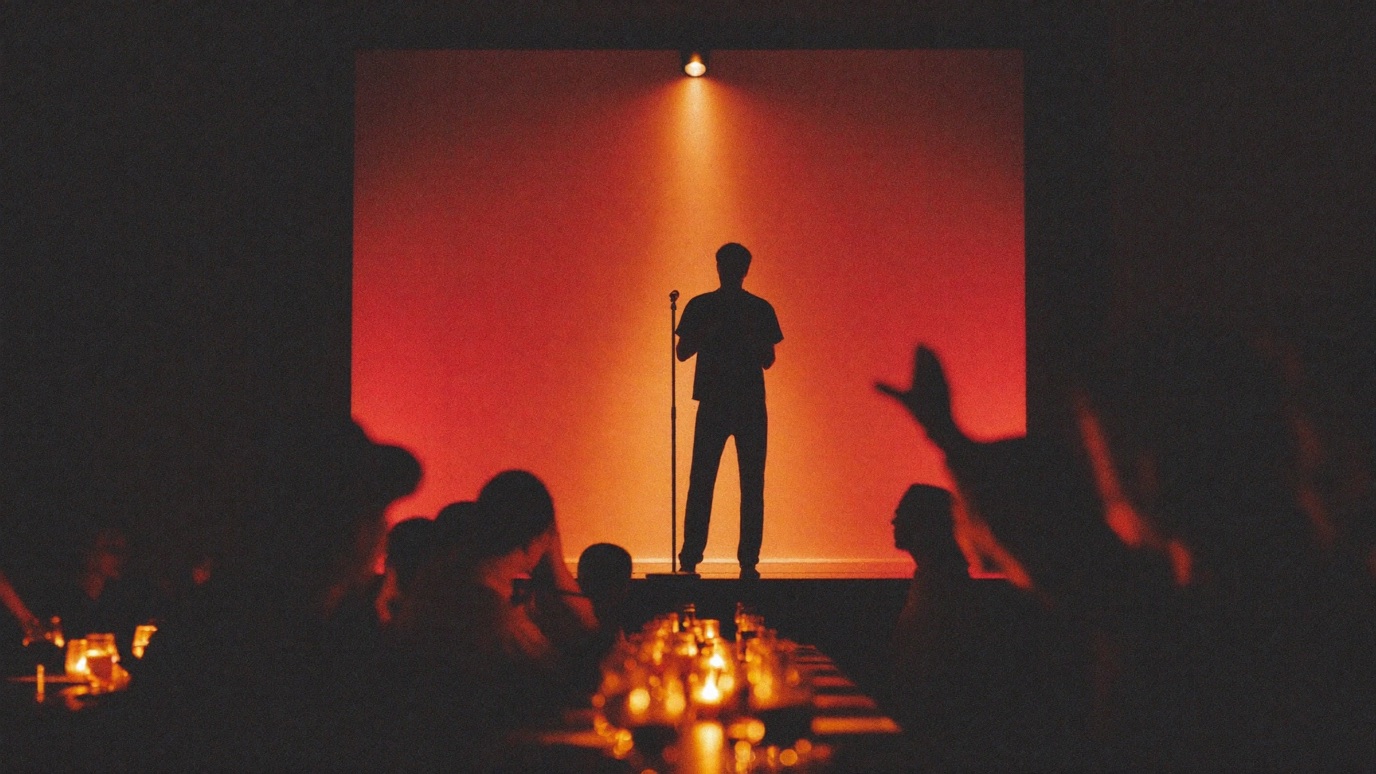
A comedy show makes money in a way almost no other live event does: the production is nearly free. There's no stage to build, no PA to truck in, no lighting rig to rent. One mic, one light, three comics, and a room. That low overhead is the entire reason a comedy night can clear a better margin than a concert grossing five times as much, and it's why the format punishes anyone who runs it like a hobby instead of a business.
The money lives in four decisions: the deal you cut on the room, how you pay the talent, what you charge at the door, and whether you run one show or two off the same booking. Get those right and a 120-seat room on a Friday can net more than a festival stage. Get them wrong and you'll pack the room, make the crowd laugh all night, and still hand the whole door to the venue and the headliner.
And there's a trap worth naming up front: comedy's low production cost makes the losses sneaky. Your talent and your room are fixed the moment you book them, so a half-full night doesn't cost half as much, it costs almost the same and earns half. That's why the swing between a great night and a soft one is so wide in comedy: a packed two-show Friday can clear a fat margin, while the same booking to a half-empty room barely breaks even. Averaged across a run of nights, a well-run room lands in roughly the 10 to 25 percent band we broke down in are events profitable. The difference with comedy is that you get to take that same bet again next month, cheaply, which is where the actual business is.
How much does it cost to put on a comedy show?
A small independent lineup show typically costs 1,500 to 3,000 dollars to stage, and talent plus promotion is most of it. The cost stack is short because you're not building anything: you're paying people and buying attention.
- Talent. The biggest line. A host, a feature, and a headliner for a small room land anywhere from a few hundred dollars to well over a thousand, depending on the draw.
- The room. Flat rental, a door split, or free in exchange for the bar. This single term swings your margin more than anything else.
- Production. Minimal. A sound tech and maybe a light, often included with the room. Budget a few hundred dollars, not thousands.
- Marketing. Where new promoters underspend. Plan for real dollars here, because an empty room is the only way this format loses money.
- Door and staff. A box office person, someone checking tickets, maybe security if there's a bar.
Here's a worked P&L for a strong two-show Friday in a 120-seat room, selling 90 tickets a show at a 25 dollar average. Your numbers will move, but the shape holds.
| Line item | Amount |
|---|---|
| Ticket sales (180 × $25) | $4,500 |
| Headliner | ($500) |
| Feature | ($150) |
| Host | ($75) |
| Room rental | ($500) |
| Production (tech, light) | ($150) |
| Marketing | ($350) |
| Door and staff | ($200) |
| Platform fee (5%, absorbed) | ($225) |
| Payment processing (~2.9% + $0.30/ticket) | ($185) |
| Net profit | $2,165 (≈48%) |
That's an excellent night, and it's real: two shows off one booking is why the top line is so high against such a small cost base. Now watch how fast it turns. Sell 45 a show instead of 90 and your revenue halves to about 2,250 dollars while talent, room, production, and marketing don't move at all. That same night nets around 100 dollars, a sliver over break-even. Nothing got cheaper because fewer people came. You just didn't fill the room. This is the whole game in comedy: the costs are locked, so sell-through is the profit lever, and promotion is a line on the P&L, not a nice-to-have. If you have never mapped a real plan to fill the room, the event marketing timeline lays out the sequence, and for a comedy night specifically, plan for a heavy final-week push because that is when most of these tickets move.
Cut the room deal before you cut anything else
The single biggest number in comedy economics is the deal you strike with the venue, and there are three shapes it takes. Flat rental: you pay a fixed room fee and keep the entire door and whatever bar arrangement you negotiate. Door split: the venue takes a percentage of ticket sales, commonly 20 to 30 percent, and provides the room. Free room for the bar: the venue charges nothing because it keeps 100 percent of drink sales, betting your crowd drinks enough to cover the space.
Which one wins depends on your draw and the bar. A packed room where the venue keeps the bar can be the best deal going, because you carry zero room cost and the crowd's tab is the venue's problem, not yours. A soft or unproven night is safer on a flat rental you can actually cover, so a slow crowd doesn't hand a percentage of your thin door to the house on top of everything else. The deal to avoid as a newer promoter is a steep door split with no bar upside: you take all the fill risk and give away margin on every ticket precisely when you can least afford it.
Get the drink minimum sorted in the same conversation as the room deal. Most comedy rooms run a two-drink minimum, and it materially changes the venue's willingness to give you a cheap room or a clean bar split. If the bar is theirs, use the minimum as leverage for a lower room fee. If you can negotiate a cut of the bar, the minimum becomes a second revenue line that scales with attendance and costs you nothing to produce.
What to pay comics without going broke
Pay talent in proportion to the draw they actually bring, not the draw they claim. The going rates for independent rooms are well documented, so use them as your anchor and adjust for your market and the night of the week.
| Role | Typical pay per show |
|---|---|
| Host / MC | $25 to $100 (higher on weekends in NYC and LA) |
| Feature act | $75 to $300 |
| Headliner (one-nighter) | $150 to $300 |
| Headliner (established weekend room) | $400 to $600 |
Those are club and lineup-show ranges, per comedy-industry rate guides like LaffStr and Comedy Booker; touring names with a real ticket-selling following negotiate their own numbers and usually want a guarantee-versus-percentage deal. That structure is worth understanding because it's how you protect yourself. A flat guarantee puts the entire downside on you: if the room is soft, you owe the full fee anyway. A door deal or a guarantee-versus-percentage split shares the risk, so a slow night hurts less and a hot night costs you more. For a newer promoter without a proven draw, the percentage-shared deal is almost always the safer profit structure, even though it caps your upside on a blowout, because the empty room is what actually bankrupts events and this is your insurance against it.
Booking itself is simpler than new promoters fear. For local and regional acts, message them directly with a specific offer: date, set length, pay, and show format, in writing. For touring headliners or anyone with representation, go through the booking agent. Once acts are confirmed, put the lineup and performers on the event page with names and photos, because a comedy ticket sells on who's on the bill, and a page that shows the lineup converts better than one that makes people guess.
How much should comedy tickets cost?
Local lineup shows at independent rooms usually price between 15 and 35 dollars, with touring headliners running higher, but the range is a sanity check, not your answer. Price from break-even and your specific room the way you would for any event: a 100-seat Friday covering a 600-dollar headliner and a 500-dollar room has a different floor than a Tuesday showcase of local features. Divide your fixed costs by a realistic, not hopeful, fill rate to find the ticket price that clears the night, then decide how much headroom the lineup earns above it.
Two pricing moves are close to free money in comedy specifically. The first is a door premium: price walk-ups a few dollars above advance so buyers are rewarded for committing early and you capture more from the crowd that always shows up at the last minute. The second is a real reason to buy early. A small early bird tier that visibly sells out pulls cash forward and puts a "selling fast" signal on the page, which matters more for a new night than the few dollars you discount.
There's a third lever if your room has any premium geography. Front tables, a booth, a two-top right by the stage: those seats are worth more, so charge more for them. Reserved seating with a white-glove seat map lets you set a front-of-room premium of 20 to 50 percent on the seats people actually fight over while the back of the room stays general admission. Most SMB platforms treat seat maps as an afterthought and enterprise ones hide them behind a sales contract, so a comedy room is exactly where assigned premium seating quietly lifts revenue, which is why we broke down how to add reserved seating without an enterprise contract in its own guide.
The two-show night is comedy's cheat code
Running two shows off one booking is the highest-leverage move in this entire playbook, and it's unique to short-format live comedy. A 7pm and a 9:30pm show use the same headliner booking, the same room rental, the same tech, and the same marketing push, but roughly double your sellable inventory. In the P&L above, the two-show structure is the only reason a 120-seat room grosses 4,500 dollars: the fixed costs got spread across 180 seats instead of 90, so the margin on the second show is close to pure profit.
The operational catch is that two shows a night is a scheduling job, and doing it by hand is where the money leaks. You need clean, separate inventory per showtime so a buyer can't accidentally grab a 7pm ticket for a 9:30pm plan, a turnover window to clear and reset the room, and door staff who know which show each ticket is for. Handle it with sessions and timeslots so each showtime is its own event with its own capacity and its own scan, instead of one blurry list you're reconciling at the door. The turnover is the operational heartbeat of a two-show night: sell the late show hard enough that the gap between houses is a controlled reset, not a dead half-hour with an empty room.
Door sales are still half the night
Plan for a meaningful share of comedy tickets to sell at the door, because they will. Walk-up culture is strong in comedy, and a good chunk of your house on a given night decided to come after dinner, not two weeks out. That's fine, as long as your door is a real box office and not a cash box and a prayer. Cash handling and untracked comps are where comedy nights quietly bleed, and it's entirely avoidable.
Run walk-ups through proper box office and door sales with tap-to-pay on a phone, so a card sale at the door lands in the same numbers as an online order, your capacity stays accurate across both shows, and you're not reconciling a shoebox at 1am. It also lets you enforce that door premium automatically and keep comps tracked as comps instead of as mystery gaps between tickets sold and butts in seats. When the whole night runs through one system, you can actually read what happened: how many walked up, how many comps went out, and what each show truly netted.
The real business is the recurring night
One great comedy night is a nice payday. A recurring night is a business, and it's where comedy quietly beats almost every other event format. Your first show is expensive to fill because nobody knows it exists. Your fifth show sells partly on its own, because regulars have it on their calendar, comics want the spot, and the venue treats you as a fixture instead of a one-off renter. The margin compounds in exactly the way a returning audience always does: acquisition costs far more than retention, so every cycle your marketing works harder for less.
The trick to running a series without redoing the work each month is to stop rebuilding the event. Duplicate the event so each month's show inherits the same ticket types, seat map, showtimes, and settings, then just swap the lineup and the date. That turns a recurring night from a monthly setup chore into a two-minute clone, and it keeps your data continuous so you can see whether the night is actually growing. Two things matter more than they look when you run the same night on repeat: the fee you pay every single cycle, and where the audience comes from. At 5 percent plus payment processing with no monthly fee or contract, more of every door stays with you, and because TickPick is also a marketplace with millions of active ticket buyers, a recurring night can pick up discovery on top of the crowd you bring yourself. A standalone tool asks you to bring 100 percent of the audience every month, which is a heavy ask for a night you're trying to turn into a habit.
Frequently Asked Questions
How much does it cost to put on a comedy show?
A small independent lineup show usually costs 1,500 to 3,000 dollars to stage. Talent is the biggest line: a host at 25 to 100 dollars, a feature at 75 to 300, and a headliner at 150 to 600 for a room. On top of that you have room rental or a door split, light production, marketing, and door staff. Because production is minimal compared with a concert, most of your budget is talent and promotion, and most of your risk is simply whether the room fills.
How do comedy shows make money?
Comedy shows make money on the door and the bar, not on production, because a mic and a light cost almost nothing. The margin comes from three moves: cutting a room deal that doesn't eat the whole door, keeping talent cost proportional to your real draw, and running two shows off one booking to spread fixed costs across twice the inventory. The biggest money, though, is in repetition: a recurring night with a returning audience gets cheaper to fill every month.
How much should comedy show tickets cost?
Local lineup shows at independent rooms usually price between 15 and 35 dollars, with touring headliners running higher. Price from your break-even and your room, not from a gut number: a 100-seat Friday that needs to cover a 600-dollar headliner and a 500-dollar room prices differently than an open-mic showcase. Add a modest door premium for walk-ups so advance buyers feel rewarded for committing early.
How do I get comedians for my show?
For local and regional acts, reach out directly through their social profiles or email with a clear offer: date, set length, pay, and show format. For touring headliners and anyone with a manager, go through their booking agent. Always confirm pay and set time in writing, and for headliners expect to discuss a guarantee, a door split, or a guarantee-versus-percentage deal before they hold the date.
Comedy is the cheapest live event to produce and one of the easiest to lose money on, because your talent and room are fixed the moment you book them. Win the night on the room deal first, pay comics in proportion to their real draw, run two shows off one booking, and treat the door as a real box office. Then do the thing comedy uniquely lets you do: run it again next month. The single night pays; the recurring night, with a returning crowd and a cloned setup, is the business.
Related Posts
How to Book Comedians: Rates, Offers, and No-Shows
What comics actually cost by draw tier, how to make an offer that gets a yes, and the deposit-and-contract setup that keeps a headliner from ghosting you on show night.
How to Throw a Warehouse Party Legally: Permits and Entry
The vibe can be underground; the paperwork can't. The assembly permit, the capacity math, the liquor options, and selling tickets without leaking the address.
How to Plan a Conference or Expo Without Enterprise Prices
Independent conference and expo producers don't need a five-figure Cvent contract. Here's how to plan a real multi-day event on self-serve tools.