

How to Host a Ticketed Watch Party: World Cup to Fight Nights
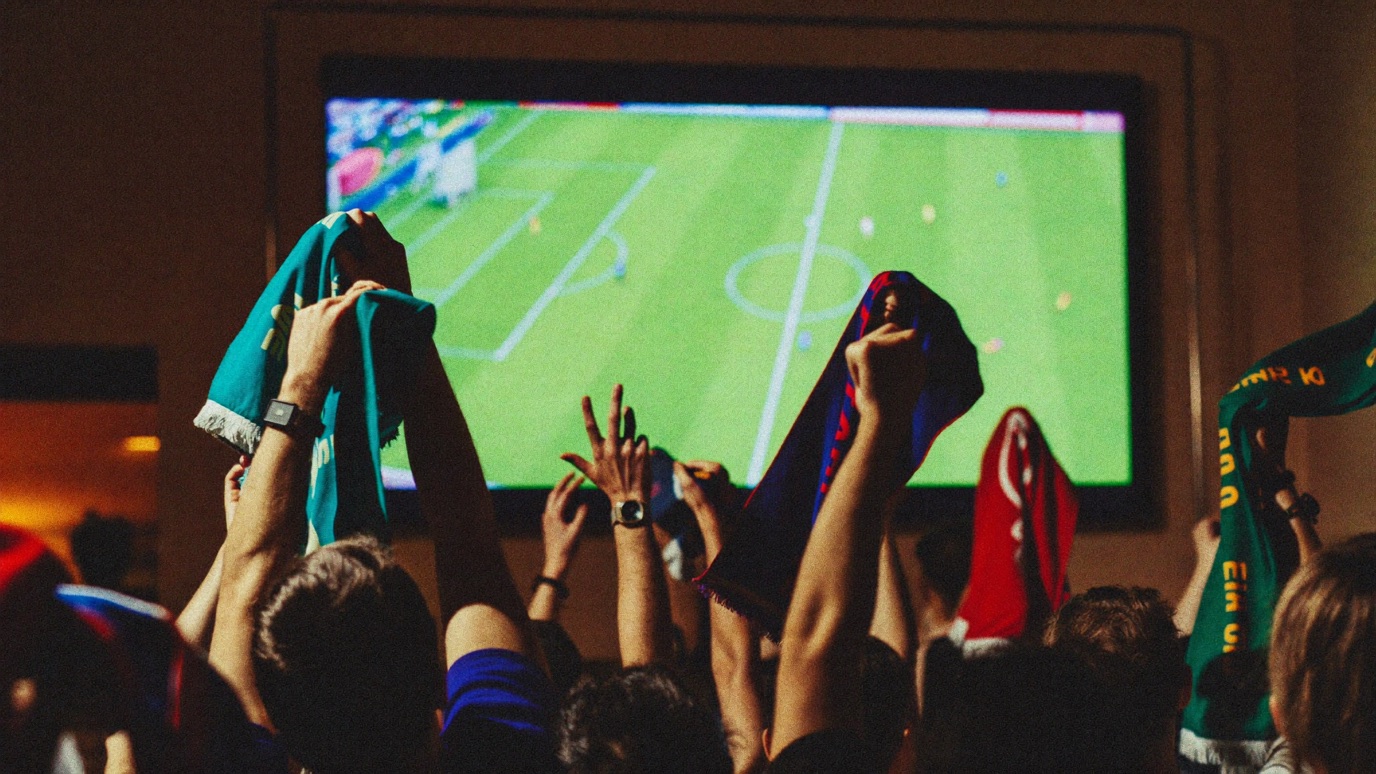
A ticketed watch party is one of the highest-margin events an independent operator can run, and the reason is simple: someone else made the content. There's no stage to build, no talent to book, no PA to truck in. A screen, a room, a crowd, and a game that a network already spent millions to produce. That's why a watch party that fills a bar can clear a 15 to 30 percent net margin, the top of the range we mapped in are events profitable, while a festival grossing ten times as much scrapes by on single digits.
The catch, and it's the whole post, is that the money you get to keep is decided before doors open, by two words most organizers never think about until a letter arrives: broadcast rights. Here's the trap. The right to show the game and the right to charge people to watch it are two different permissions. Plenty of venues have one and assume it covers the other. It doesn't, and the gap between them is exactly where the fines live.
So this is a money-first playbook for watch parties across the calendar: the World Cup on US soil right now, NFL Sundays, fight nights, March Madness, awards shows. We'll sort the licensing tier by tier, pick the revenue model that keeps the most margin, run a real P&L for a fight night, and then do the thing that turns one good night into an actual business: run it every week.
Can you charge admission for a watch party?
Usually yes, but showing the broadcast and charging for it are separate permissions, and which ones you need depends entirely on what you're putting on the screen. A regular Tuesday-night soccer match and a marquee pay-per-view fight sit in completely different legal buckets, even though both are "a game on a TV."
The mistake that gets venues in trouble is treating the home experience as the commercial one. You cannot log into a personal streaming account or buy a residential pay-per-view the way you would on your own couch and then charge a room full of paying guests to watch it. Commercial venues need commercial rights, full stop. Get those right and charging admission is normal and legal. Get them wrong and you're not running an event, you're committing piracy that distributors are very good at catching.
The three licensing tiers nobody explains
There are three broad buckets of live content, and each one has its own rights path and its own cost. Sort your event into the right bucket first, because it changes your budget before it changes anything else.
| What you're showing | What you need | Rough cost | Who from |
|---|---|---|---|
| Regular-season games (NFL, NBA, MLB, college) | Commercial TV subscription | Monthly commercial rate; NFL Sunday Ticket for Business scales by venue | Your cable/satellite provider |
| Pay-per-view combat sports (UFC, boxing) | Commercial closed-circuit license | From ~$1,200 for ≤100 capacity, climbing into five figures for big rooms | Joe Hand Promotions (UFC), G&G / J&J Sports (boxing) |
| FIFA World Cup and special international events | Public viewing license (for commercial events) | Varies; declared in your application | FIFA Public Viewing program |
The first bucket is the easy one. Showing regular-season broadcasts in a bar means paying for a commercial TV subscription instead of a home account. Providers price these by venue, and packages like NFL Sunday Ticket for Business exist precisely so a commercial room can show the games legally. A cover charge on top of a commercial subscription is generally fine for ordinary regular-season games.
The second bucket is where the real money and the real risk both live. Pay-per-view fights are licensed commercially through official distributors, and the fee is based on your room's fire-code capacity, not on how many people actually show up. A UFC pay-per-view starts around 1,200 dollars for a room of 100 or fewer and climbs steeply from there, with a 500-capacity room billed well into five figures for a marquee card. Boxing runs through separate distributors like G&G Closed Circuit and J&J Sports. That fee is a fixed cost the moment you buy it, so a fight night has to be priced and promoted to clear the license before it earns you a dollar.
The third bucket is the timely one. FIFA runs a formal public viewing program for the World Cup, and a watch party tips into "commercial" territory once you charge admission, promote it as a distinct event, or take sponsorship. Commercial public viewings need a FIFA public viewing license; even indirect commercial benefit can bring an event inside the framework. If you're planning a knockout-round party as a real ticketed event this summer, that license is part of the plan, not an afterthought.
The Super Bowl is its own minefield. The NFL aggressively protects the "Super Bowl" trademark and has sent cease-and-desist letters to bars, and even churches, that charge admission to Super Bowl parties or advertise using the name. You can show the game on a commercial subscription, but be careful about charging admission specifically tied to it and about using the protected name in your promotion. Distributors and leagues sue over unauthorized commercial broadcasts under federal law, with claims that run into tens of thousands of dollars per showing plus attorneys' fees. This is not a theoretical risk; it's an active enforcement business.
Cover charge, ticket, or table minimum: pick your model
There are three ways to monetize a watch party, and the right one depends on the draw of the specific event. A regular Sunday and a title fight should not use the same model.
The three options are a cover charge collected at the door, an advance ticket sold online, and a food-and-beverage minimum that trades admission for a guaranteed spend. Most rooms end up mixing them: a small cover for regular games, real tickets for marquee events, and table minimums for the premium seats near the screen. The one bulleted breakdown worth having:
- Cover charge works for low-stakes, high-frequency nights (an NFL Sunday, a group-stage match). It's simple and it captures walk-ups, but you learn nothing about your audience and you can't plan capacity.
- Advance tickets are the model that actually builds a business. You pull cash forward before the event, you cap capacity so you don't oversell a fire-code limit, and every buyer becomes a contact you can reach for the next fight. This is the right default for anything with real demand.
- Table minimums monetize the premium geography, the booths and high-tops with a clean sightline to the main screen, without pricing out the standing crowd at the bar.
My honest take: for anything bigger than a routine regular-season game, sell advance tickets, not just a door cover. The cover charge feels easier because there's no setup, but it throws away the two things that make watch parties compound. It gives you no way to plan against a hard capacity limit, and it leaves you with zero record of who came, so every event starts your marketing from scratch. A fight night that sells out on cover charges is a good night. A fight night that sells out on tickets is the first data point in a season.
What a fight night actually nets
Here's an illustrative P&L for a pay-per-view fight night in a 150-capacity bar, selling 120 advance tickets at 30 dollars with a couple of table packages and a modest bar split. Your numbers will move, but the shape is the point.
| Line item | Amount |
|---|---|
| Ticket sales (120 × $30) | $3,600 |
| Table packages | $600 |
| Bar split (15% of bar) | $900 |
| Total revenue | $5,100 |
| Commercial PPV license (150 cap) | ($1,800) |
| Staff and security | ($600) |
| Marketing | ($400) |
| Extra AV / screen rental | ($250) |
| Platform fee (5%, absorbed) | ($210) |
| Payment processing (~2.9% + $0.30/ticket) | ($160) |
| Net profit | $1,480 (≈29%) |
Twenty-nine percent for a night where the main attraction was produced entirely by someone else. That's the watch-party advantage in one number. But notice the license line, and notice that it doesn't move. Sell 60 tickets instead of 120 and your revenue nearly halves while that 1,800 dollar license, the staff, and the AV cost exactly the same. The night swings from a strong profit to barely breaking even. It's the same fixed-cost trap that governs every live event's margin: the costs lock in before the crowd shows, so sell-through is the whole game. The difference with a watch party is that the biggest fixed cost, the content, is a flat license instead of a talent guarantee, which is why the format forgives a soft night better than most and rewards a full one so richly.
Capacity, reservations, and the door
Watch parties have an operational signature that concerts don't: everyone arrives at once. Nobody strolls in an hour after kickoff. The room goes from empty to full in the fifteen minutes before the whistle, and if your door can't absorb that surge, you've got a line of paying guests missing the opening they came for.
Two tools carry that moment. Fast QR check-in that scans an advance ticket in a second keeps the pre-kickoff rush moving and blocks the duplicate-screenshot trick at the same time, so your scanned count matches your sold count. And because a real share of a watch party crowd decides to come at the last minute, run walk-ups through proper box office and door sales with tap-to-pay on a phone, so a card sale at the door lands in the same numbers as an online order and your live capacity count stays honest against the fire-code limit. Reconciling a cash box at last call, against a room you were guessing the size of all night, is how watch-party money quietly leaks.
Set a door price a few dollars above advance and say so in your promotion. It rewards the people who bought early, which is exactly the behavior you want to train for a recurring series, and it captures more from the walk-up crowd that was always going to show up regardless. The advance buyers are also the only ones you can reach before the next event, so every dollar of friction you remove from buying early pays off twice.
Turn one watch party into a season
One sold-out fight night is a payday. A season of them is a business, and watch parties are almost purpose-built for the recurring model, because the schedule is handed to you. The NFL runs 18 weeks. A UFC card lands most months. The World Cup is a month of matches, the fight calendar refreshes constantly, and every one of those dates is a watch party you already know is coming.
The move is to stop selling single nights and start selling the season. A season ticket or multi-event pass for every home game, or a fight-night membership, turns a string of one-offs into upfront cash flow and a reason for regulars to commit to your room over the sports bar down the street. This is the same flywheel that makes a recurring comedy night beat a one-off show: your first watch party is expensive to fill because nobody knows it exists, but your fifth sells partly on its own, because the regulars have it on their calendar and their group chat does your promotion for you. Acquisition costs far more than retention, so every event you run makes the next one cheaper to fill.
Two things make the season play work instead of just sounding nice. The first is a way to reach the crowd from the last event before the next whistle: push notifications to the fans already following your events are a free channel to announce the next fight the moment it's official, while the last one is still fresh. The second is the fee you pay on every single date. At 5 percent plus payment processing, with no monthly SaaS fee and no contract, more of every cover and every ticket stays with you across a full season of events, and because TickPick is also a marketplace with millions of active ticket buyers, a big match or a marquee card can pick up discovery on top of the regulars you bring yourself. A standalone tool asks you to source 100 percent of the audience for every date on the calendar. For a format whose entire advantage is running the same night on repeat, that's the wrong math.
Frequently Asked Questions
Can I charge admission for a watch party?
Usually yes, but the right to show the broadcast and the right to charge for it are two separate permissions. For regular-season games shown on a commercial TV subscription, a cover charge or ticket is generally fine. For pay-per-view fights you need a commercial closed-circuit license, and for marquee events like the Super Bowl or the World Cup the rights holder can restrict or license admission specifically. Sort the rights before you sell a single ticket.
Do I need a license to show a game at my event?
To show sports in a commercial venue you need commercial broadcast rights, not a home account. Regular-season broadcasts require a commercial TV subscription from your cable or satellite provider. Pay-per-view combat sports require a commercial license from the official distributor, such as Joe Hand Promotions for UFC. FIFA World Cup public viewings that are commercial or promoted as distinct events require a FIFA public viewing license. Using a residential account in a bar is piracy, and distributors actively pursue it with lawsuits.
How much should watch party tickets cost?
Price from the draw of the event, not a flat house number. A regular NFL Sunday or a group-stage soccer match usually works as a small cover of 5 to 20 dollars or a table minimum. A marquee fight night or a knockout-round World Cup match supports a real 20 to 50 dollar ticket, and premium seating or table packages go higher. Always price a pay-per-view night to clear the commercial license first, because that fee is fixed the moment you buy it.
How much does it cost to show a UFC or boxing pay-per-view at a bar?
Commercial pay-per-view licenses are priced on your venue's fire-code capacity, not on how many people show up. A UFC pay-per-view starts around 1,200 dollars for a room of 100 or fewer and climbs steeply with capacity, with large rooms billed well into five figures for a major card. Boxing is licensed separately through distributors like G&G Closed Circuit or J&J Sports. Budget the license as a fixed cost and price your tickets to cover it before you profit.
A ticketed watch party is one of the best margin plays in live events, because the expensive part, the content, is a flat license instead of a talent guarantee. Win the night by getting the broadcast rights right first: a commercial subscription for regular games, a closed-circuit license for pay-per-view fights, a FIFA license for a commercial World Cup viewing. Sell advance tickets rather than just a door cover so you can plan capacity and keep the audience, price a fight night to clear its license before it profits, and then run the format the way it wants to be run: every week, all season, for a crowd that gets cheaper to fill each time.
Related Posts
How to Run a Basketball Tournament: The Gate Nobody Solves
Tournament software handles team registration. Almost nobody handles the gate, which is where the real spectator money and the real door chaos both live. Here's the ticketing playbook.
How to Throw a Warehouse Party Legally: Permits and Entry
The vibe can be underground; the paperwork can't. The assembly permit, the capacity math, the liquor options, and selling tickets without leaking the address.
How to Plan a Conference or Expo Without Enterprise Prices
Independent conference and expo producers don't need a five-figure Cvent contract. Here's how to plan a real multi-day event on self-serve tools.