

How to Run a Basketball Tournament: The Gate Nobody Solves
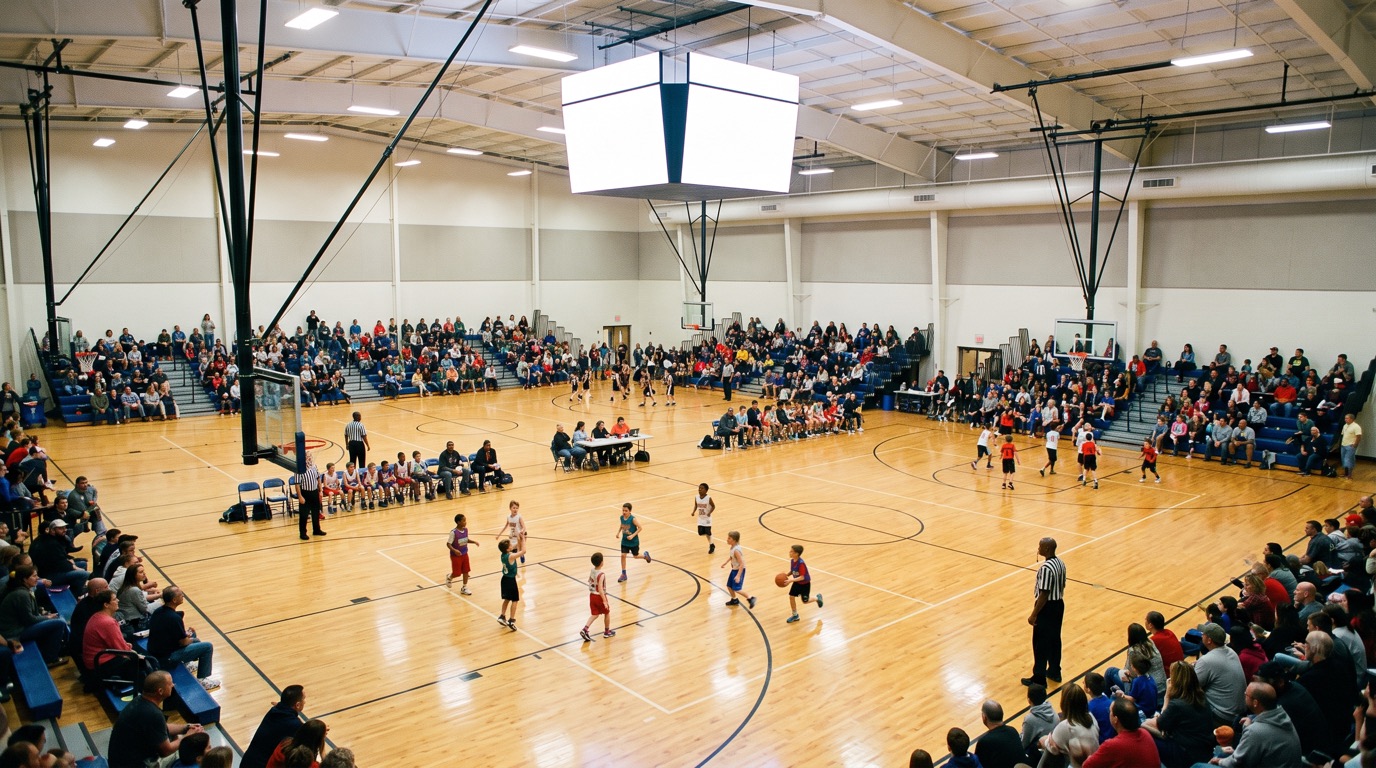
Tournament registration is a solved problem. Team sign-ups, brackets, pool play, seeding, court assignments: a dozen platforms handle all of it, and any director running a travel event already pays for one. What almost none of them handle, and what most tournaments still run off a folding table with a cash box and a roll of raffle tickets, is the spectator gate. That's the part left to chance, and it's the part where the real money and the real Saturday-morning chaos both live.
The gate matters more than tournament directors treat it. Youth sports is roughly a $40 billion market in the US each year according to industry estimates, and youth and amateur sports travel spending hit $52.2 billion in 2023, actually outpacing the $47.1 billion Americans spent traveling to watch pro and college sports. The families are already in the building, already traveling, already spending. A tournament that collects team entry fees of $100 to $700 per team and then waves spectators in for free, or lets them pay a bored teenager in loose cash, is leaving its second-largest revenue line on the table and losing track of who walked in.
This is the ticketing half of running a basketball tournament: how to price a spectator pass, how to structure day and weekend and family options, how to run one gate cleanly against a schedule of games on four courts at once, how to staff the door so cash doesn't evaporate, and how to turn concessions into a second gate. It's written for basketball, but the same mechanics run a volleyball, wrestling, or esports event with the age brackets swapped out.
How do tournaments charge spectators?
Most tournaments sell a spectator pass for the day, not a ticket per game, because the unit of attendance is a family that watches basketball from 8am to 8pm across several courts, not a single seat for a single tip-off. Charging per game would be a nightmare to enforce and would punish exactly the parents who came to watch every minute their kid plays. So the pass is the product, and it comes in a few standard shapes.
The three that cover almost every event are the single-day pass, the weekend pass priced below buying two days separately, and a family or group bundle that caps what one household pays no matter how many people it brings. Layer a free credential for coaches, players, and working staff on top, and you've described how nearly every organized tournament gates its doors. Players and coaches never pay; spectators always do; the pass covers the whole venue for the period it's good for.
The one real decision underneath all of this is whether to charge at all. A small local rec tournament can reasonably run a free gate and make its money on entry fees and concessions. Once you're renting a field house, paying referees across four courts, and drawing traveling teams, a paid gate isn't gouging, it's how the event pays for the building. The question isn't whether to charge, it's how to charge without making the parents who already spent a fortune to get there feel nickel-and-dimed at the door.
What to actually charge
Price the pass off the tier of your event, not off the biggest number you can get away with. Here's where 2026 gate prices actually sit across the levels of youth basketball, pulled from published tournament pricing:
| Event tier | Typical spectator gate | Notes |
|---|---|---|
| Small local / rec | Free to $5 per day | Concessions and entry fees carry the event |
| Community / regional | $5 to $10 per day | The most common range for weekend travel events |
| Larger travel circuit | $17 to $22 per day | Big Time Hoops and similar; weekend pass around $30 |
| Premium / showcase | $35 to $45+ per day | Exposure events; some passes now top $60 |
There's a real ceiling here, and some events have blown through it. Sports Illustrated reported that admission to certain AAU showcase events now costs more than an NBA playoff ticket, which is the kind of headline that follows an organizer around. A family with two kids on two different teams can pay a gate fee twice, buy lunch for four, and leave having spent more to watch amateur basketball than they'd spend on a night out. That's the trap. You can price to that ceiling once. You cannot price to it and expect those families to come back next season, and youth tournaments live and die on the same traveling teams returning year over year.
My take: set a fair single-day price for your tier, then make the weekend pass and the family bundle obvious and worth it. A weekend pass at $30 against a $20 day rate rewards the people staying all weekend, which is most of your draw. A family cap, say $50 for a household regardless of headcount, is the single move that most protects your reputation with the parents you need back. It costs you a little at the margin from big families and buys you enormous goodwill, and goodwill is what fills next year's bracket. Charge for the event honestly; don't tax the families for showing up in numbers.
Sell the weekend pass and family bundle online before doors, not just at the gate. A parent who buys a $30 weekend pass on Thursday has committed to both days and won't be tempted to skip Sunday. You also pull that cash forward before you've paid a single referee, and you turn every buyer into a contact you can email when next season's tournament opens registration. A gate that only takes walk-up cash teaches you nothing about who came.
One gate, four courts, two days: the scheduling problem
A basketball tournament's ticketing signature is that the schedule and the gate are decoupled. Games run continuously on multiple courts from morning to night, but a spectator pays once and roams. That means your pass has to be tied to a day or a weekend, not a game, and your entrance has to enforce that cleanly while games are tipping off every 90 minutes behind it.
Two features make this work without a clipboard. The first is a pass sold as a multi-day or festival-style ticket so a single purchase can cover a whole weekend of games across every court. The second, and the one directors always forget until Sunday, is check-in windows that scope each pass to the day it's valid for: a Saturday day pass scans green on Saturday and red on Sunday, while a weekend pass scans green both mornings. Without that, a Saturday buyer walks back in free on Sunday and you never know. Set the passes to allow re-entry on the same scan, too, because families leave for lunch and come back, and a pass that only works once turns your gate into an argument by noon.
Before you set a gate price, confirm your capacity and your permits with the venue. A school gym or a municipal field house has a fire-code occupancy that counts spectators, not just players, and some facility rental agreements restrict or take a cut of admission and concessions. Selling more passes than the building is rated for, or running a paid gate your venue contract doesn't allow, is how a good tournament becomes a canceled one. Sort the room's limits before you sell the first pass.
Staff the door so cash doesn't walk
The fastest way to lose tournament money isn't underpricing the gate, it's running the gate on cash and trust. A busy tournament door moves hundreds of families in the ninety-minute surge before the first games, and a shared cash box with no record is an invitation for both honest mistakes and dishonest ones.
Run the door the way a real box office runs. Give each gate worker their own scanner PIN on their own phone rather than one shared login, so you can open three or four lanes at once during the morning rush and every scan is tied to a person. Take card payments for walk-ups through proper box office and door sales with tap-to-pay on a phone, so a card sale at the gate lands in the same live count as an online pass and you're not reconciling a shoebox of twenties at midnight. The goal is that your scanned count, your sold count, and your cash count all agree when you close out the night. That's the same door discipline that keeps a ticketed watch party from leaking cash at last call, and it matters more at a tournament because your surge is sharper and your staff is usually volunteers.
Concessions and add-ons are the second gate
The gate is your first revenue line off spectators. The concession stand is your second, and it's often the bigger one, because a family in a gym for eight hours eats lunch, buys snacks, and grabs waters between games. Those travel families are already primed to spend; the $52.2 billion travel figure isn't just hotels, it's everything they buy once they arrive.
Fold that spend into the same system instead of running it as a separate cash operation. Sell add-ons alongside the pass at checkout: a parking pass, a printed bracket program, a team spirit shirt, a concessions credit or meal bundle a parent can buy once and redeem all weekend. Pricing an add-on at roughly 10 to 25 percent of the pass price is the range that converts without feeling like an upsell, and every dollar that moves from a loose cash stand to a tracked add-on is a dollar you can actually count. The margin logic here is the same one that governs whether any event is profitable: the fixed costs (the building, the refs, the staff) are locked before doors open, so the per-head spend you capture on top of the gate is close to pure margin.
What a weekend gate actually nets
Here's an illustrative gate-and-add-on picture for a mid-size travel tournament: 48 teams, roughly 600 spectators a day across two days, at a $20 day pass with a healthy share buying weekend passes and bundles. The team entry fees are a separate line that already covers courts, refs, and awards; this is purely the spectator side that most directors leave on the table.
| Line item | Amount |
|---|---|
| Day passes and weekend passes (~1,000 paid entries, blended ~$22) | $22,000 |
| Family bundles (uplift over per-head) | $1,500 |
| Concessions credits and add-ons | $6,000 |
| Total spectator revenue | $29,500 |
| Extra gate staff (beyond volunteers) | ($1,200) |
| Payment processing (~2.9% + $0.30/order) | ($900) |
| Platform fee (5%, absorbed) | ($1,475) |
| Net from the gate | $25,925 |
Nearly $26,000 that a free gate collects zero of, on an event whose costs were already paid by team entry fees. That's the case for treating the spectator gate as a real product instead of a folding table. And it scales with your reputation, not your effort: the same door setup that runs 48 teams runs 96, so the second year, when the bracket fills faster because families remember a fair price and a fast door, the gate compounds.
On fees, the math is worth being plain about, because a tournament runs a lot of low-priced transactions and per-ticket flat fees punish exactly that. At 5% plus payment processing with no monthly SaaS fee and no contract, more of every $20 pass and every concession bundle stays with the event, and because TickPick is also a marketplace with millions of active ticket buyers, a big showcase can pick up spectator discovery on top of the families the teams bring themselves. A standalone gate tool asks you to source every spectator yourself. For an event that already draws a traveling crowd, that's the wrong end of the deal.
Frequently Asked Questions
How do tournaments charge spectators?
Most tournaments sell a spectator pass at the gate rather than a ticket per game, because one family watches games all day across several courts. The common structures are a single-day pass, a full-weekend pass at a discount to buying each day, and a family or group bundle that caps what one household pays. Coaches, players, and staff enter free on a credential; everyone else buys a pass that covers the whole venue for that day.
How much are basketball tournament tickets?
Spectator gate prices in 2026 run from free at small local events to about $5 to $10 per day at community tournaments, $17 to $22 per day on the larger travel circuits, and $35 to $45 or more for premium single-day passes at showcase events. Weekend passes typically land around $30. Prices have climbed fast enough that some events now charge more than a pro playoff ticket, which is a real backlash risk to weigh before you set yours.
How do you scan tickets at a multi-day tournament?
Sell a digital pass with a QR code and scan it at the entrance each morning. Use check-in windows so a Saturday pass only validates on Saturday and a weekend pass validates both days, and set the pass to allow re-entry so families can leave for lunch and come back on the same scan. Give each gate worker a scanner PIN on their own phone instead of sharing one login, so several lanes run at once and every scan is attributed.
The team side of a basketball tournament is already handled by registration software. The gate is the part left to a cash box, and it's the part with real money in it: a fair spectator pass, a weekend option, and a family cap can net five figures on an event whose costs are already covered by entry fees. Price off your tier, not the ceiling, because these families come back year after year and a gate that costs more than a playoff ticket doesn't. Then run the door like a box office: multi-day passes with day-scoped check-in windows, re-entry on, a scanner PIN per gate worker, tap-to-pay for walk-ups, and concessions folded in as tracked add-ons. Get that right and the gate compounds with your reputation instead of your effort.
Related Posts
How to Host a Ticketed Watch Party: World Cup to Fight Nights
A watch party is one of the highest-margin events you can run, because someone else made the content. The catch is broadcast rights. Here's the licensing, the revenue model, and the season-long play.
How to Host a Paid Tailgate Event: Parking and Profit
A paid tailgate is a parking business with a party on top. The lot is the whole game, and the profit lives in the add-ons, not the entry pass. Here's the model, the compliance, and the season play.
How to Organize a Food Festival: Vendors, Tickets, and Margins
A food festival's profit is set by two dials most first-timers ignore: what you charge vendors and what each attendee spends inside. Here's how to work both.