

How to Organize a Food Festival: Vendors, Tickets, and Margins
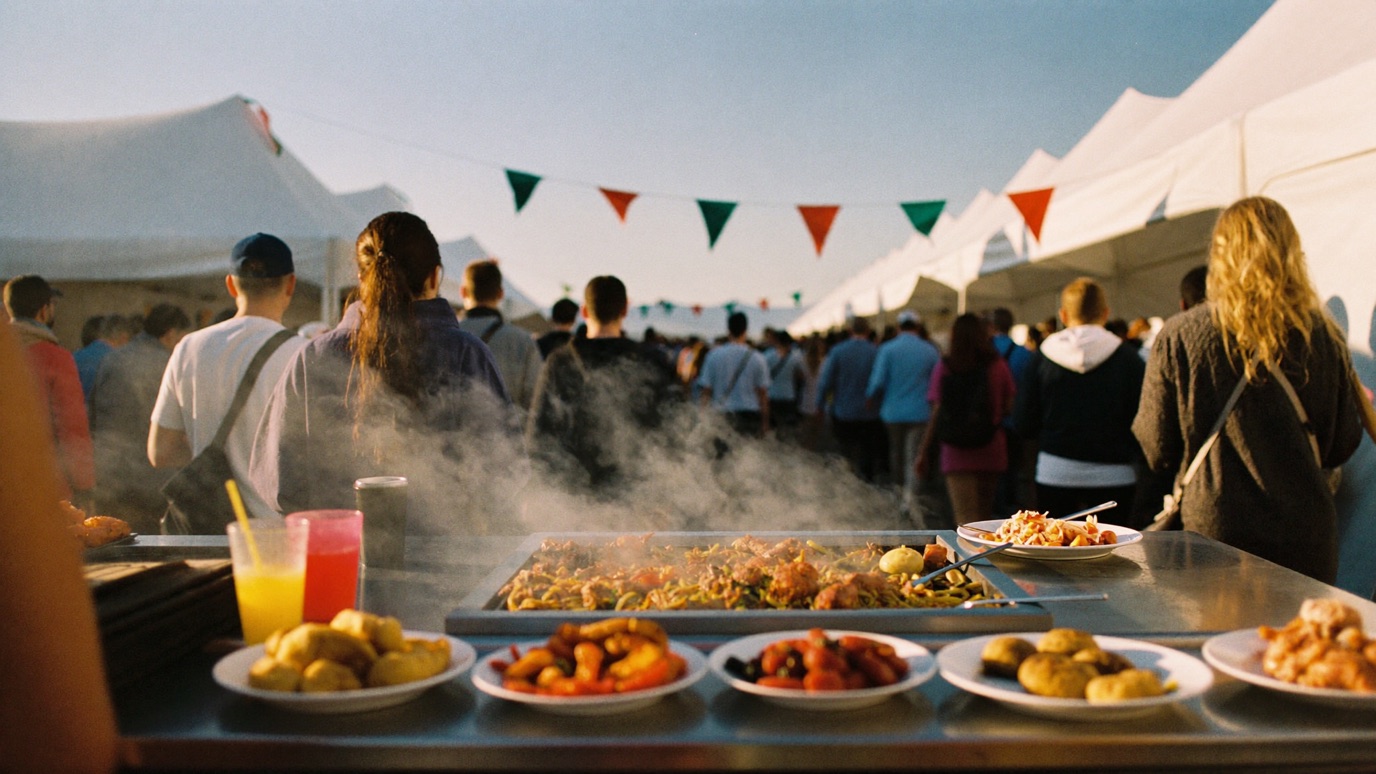
A food festival lives or dies on two numbers most first-time organizers never set on purpose: what you charge the people cooking, and what each guest spends once they're inside. Ticket price gets all the attention, but the gate is rarely where a food event makes its margin. The vendors and the per-head spend are.
That's the reframe worth internalizing before you book a single taco truck. Your big costs (site, permits, staffing, marketing, insurance) are mostly fixed the moment you commit to them, which is the same math that governs whether any live event turns a profit. So the job is to set those fixed costs carefully, then engineer the two revenue dials you actually control: vendor economics and on-site spend. This post walks both, plus the ticket model, the permits that quietly sink first-timers, and how to keep the crowd moving so people buy more instead of standing in line.
It assumes a for-profit event of a few thousand people: a taco fest, a wing throwdown, a wine-and-food weekend, a night market. Not a church bake sale, and not a state fair. The specifics scale up and down, but the structure holds.
How much should I charge food festival vendors?
Charge either a flat booth fee, a percentage of each vendor's sales, or a hybrid of both. Flat booth fees for a standard 10x10 space commonly run from a couple hundred dollars at small local events up to $1,000 or more at established festivals, with 2026 examples like CityScape's Fall FunFest at $450 for a 10x10 and premium BBQ and wine events landing near $1,000 for a limited number of food slots (The Truck Chef, Fall FunFest). Power, water hookups, and corner or high-traffic locations get charged on top.
The percentage model asks vendors for a cut of sales instead, usually somewhere in the 10 to 25 percent range. Here's the tradeoff, and it's the decision that shapes your whole vendor pitch:
| Vendor model | Typical range | Use it when |
|---|---|---|
| Flat booth fee | $150 to $1,000+ per 10x10 | You want guaranteed income, simple accounting, and vendors who accept the risk |
| Revenue share | 10 to 25% of vendor sales | Traffic is proven, and you want to lower the barrier for vendors to commit |
| Hybrid | Lower fee plus a smaller % (e.g. $250 + 10%) | A new event: you get a floor, they get a reason to bet on you |
A flat fee is money in the bank before doors open, which is exactly what you want when your own bills are due early. But it scares off good vendors at a first-year event with no attendance track record, because they're taking all the risk. A revenue share flips that: it costs a vendor nothing to show up, so you can fill the aisle with stronger operators, but you only make real money if the crowd shows and spends, and you now need a way to verify sales. For a first or second-year festival, the hybrid usually wins. A modest flat fee covers your floor and signals the event is real, and a small percentage on top gives you upside if the day goes well without asking vendors to gamble their whole booth cost on you.
Whatever you choose, standardize what the fee includes (space size, one power drop, one table, wristbands for staff) and price extras separately. Ambiguity here is where vendor relationships go sour, and vendors talk to each other.
Entry ticket or tasting ticket? Pick one on purpose
There are two ticket models for a food festival, and mixing them up muddies the pitch to both vendors and attendees. An entry ticket charges for admission, then guests buy food and drink individually from vendors inside. A tasting ticket bundles a set number of samples into the ticket price, and vendors get reimbursed by you per sample redeemed.
Entry tickets are simpler and lower-risk for you. Attendees pay to get in (often $10 to $30 for a general food festival), vendors keep their own sales, and your revenue is the gate plus vendor fees plus add-ons. This is the right default for taco fests, night markets, and street-food events where the appeal is variety and volume.
Tasting tickets fit curated wine, beer, and gourmet events where the promise is "try everything for one price." They command a much higher ticket price (often $45 to $95), but they're operationally heavier: you're tracking redemptions, reconciling vendor payouts, and managing the risk that a few vendors get slammed while others sit idle. Only run this model if the experience genuinely justifies the premium and you have the staff to reconcile it. If you're not sure, sell an entry ticket and layer premium experiences as add-ons instead, which gets you most of the upside with far less accounting.
The real profit lever is what people spend inside
On-site spend, not the ticket, is where a food festival makes its margin. Attendees at food and drink events commonly spend $40 to $75 per head beyond admission, and the events that optimize for it clear $60-plus (Cleo Pay, Ticket Fairy). Multiply that across a few thousand people and it dwarfs the gate. So the design question for the whole event becomes: how do I get each person to buy one more thing?
Two moves do most of the work. The first is going cashless. Moving to tap-to-pay and RFID commonly lifts per-attendee spend 15 to 30 percent, because the friction of digging for cash or hunting an ATM is exactly what kills the impulse third purchase (atVenu). If every vendor takes cards or a festival wristband, people buy more. It's the single highest-return operational decision you'll make.
The second is packaging premium experiences as Add-Ons attached to the ticket. A fast-lane entry pass, a VIP tasting tent with early access, a commemorative glass or tote, a reserved shaded seating area, a bundle of drink tokens at a slight discount. Add-ons priced against a ticket someone already decided to buy convert well, and they lift revenue per head without you selling a single extra admission. This is the same per-attendee logic behind VIP tickets and upsells at any event, applied to a crowd that's already in a spending mood because they came to eat.
Sell drink tokens or tasting packages as an add-on during checkout, before the event, not just at the gate. Pre-sold consumption is cash in hand weeks early (when you need it for deposits) and it primes people to spend more on the day, because they arrive already holding credit they intend to use. It also gives you a real demand read on which experiences to expand next year.
Permits and the health department come first
Get your permits moving before you announce anything, because a food festival triggers more of them than almost any other event type. You'll typically need a special event or temporary use permit from the city, and here's the part first-timers miss: a temporary food establishment permit from the county or state health department, usually one per food operation. Add alcohol licensing if you're serving, fire-marshal sign-off on tents over a certain size, and sometimes amplified-sound and road-closure approvals on top.
The health piece is the trap. Each vendor generally carries their own temporary food permit, needs handwashing and cold-holding that meet code, and can be shut down on the spot if an inspector finds missing paperwork or a cold item sitting warm. That's not just their problem, it's yours, because an empty booth in your aisle is your refund risk and your reputation. Build permit compliance into your vendor agreement, collect proof of each vendor's food handler certification and permit before the event, and give yourself a deadline to chase the stragglers.
Do not open ticket sales until your special event permit path is confirmed. Selling tickets to a festival you're not yet cleared to hold turns a permitting delay into refunds, chargebacks, and a credibility hole you won't climb out of in year one. Health-department and city timelines commonly want applications 60 to 120 days out, and they do not care that you already announced. Read the full picture in our guide to what any live event actually costs to run, and treat permits as the gating line item.
Collecting the right information from vendors and attendees up front is its own small system. Use Checkout Questions to gather what you need at the point of sale: dietary restrictions and allergies from ticket buyers so you can brief vendors and signage, and, on the vendor side, permit numbers, certificate uploads, power requirements, and menu details. Getting that data structured at purchase beats chasing it over email the week before, when you have a thousand other fires.
Use sessions to smooth the crowd and lift spend
Timed-entry sessions are the tool that turns a chaotic single surge into a steady, spending crowd. A food festival that admits everyone at noon creates a lunch-rush wall: 40-minute lines at every popular stall, attendees who buy one thing and leave frustrated, and vendors who can't physically serve the demand in the window. Spread that same crowd across staggered arrival windows and everyone wins. Lines stay short, people wander longer, and a guest who isn't stuck in line buys the second and third item that makes your per-head number.
Sessions & Timeslots let you sell entry in waves (say noon, 1:30, and 3:00) with capped capacity per window, which is both a crowd-control tool and a subtle pricing lever, since prime lunch and dinner slots can carry a premium. Pair it with QR Check-In so your gate staff scan entries fast, see live scanned-versus-sold counts, and block duplicate or screenshot tickets at the door. Fast, accurate entry keeps the first impression clean and gives you real attendance data by session to plan next year's capacity.
How food festivals actually make money
Pull it together and the model is clear: vendor fees and ticket sales cover your fixed costs, and profit comes from on-site spend, add-ons, and sponsorship stacked on top. The festivals that clear real margin are the ones that treat the gate as the entry point to spending, not the finish line.
Sponsorship deserves its own mention because it's the revenue that can arrive early, exactly when your permit fees and deposits are due. A regional beverage brand, a local grocery chain, or a kitchen-equipment company will pay for stage naming, a sampling activation, or category exclusivity, and that check can land months before ticket revenue does. Our guide to building sponsorship packages for for-profit events covers how to price a rate card off your audience data, and a food festival's demographics (local, food-motivated, higher disposable income) are genuinely attractive to the right sponsor.
Keep your platform fee low on top of all this, because ticketing costs come straight out of the margin you just worked to build. At 5 percent plus payment processing, with no monthly SaaS fee and no contract, more of every ticket and add-on stays in your budget. And a food festival listed on a ticket marketplace gets in front of buyers already browsing for things to do in their city, which is discovery your own flyers and social posts can't manufacture on their own. For an event whose profit is built one $12 purchase at a time, protecting both ends (a low fee and cheap reach) is what turns a fun weekend into a business you run again next year.
Frequently Asked Questions
How much should I charge food festival vendors?
Flat booth fees commonly run from a couple hundred dollars at small local events to $1,000 or more at established festivals for a standard 10x10 space, with power, water, and premium locations charged on top. The alternative is a revenue share, typically 10 to 25 percent of each vendor's sales, or a hybrid of a lower flat fee plus a smaller percentage. Use flat fees when you want guaranteed income and simple accounting, and a revenue share when traffic is proven and you want to lower the barrier for vendors to say yes.
How do food festivals make money?
Vendor fees and ticket sales are the base, but the margin usually comes from what happens inside the gates: on-site spend commonly runs $40 to $75 per attendee, add-ons like tasting packages and fast-lane entry, and sponsorship. Because your fixed costs are set before the event, profit is driven by how many people you get through the door and how much each one spends once they're in. Sponsorship and cashless payments are the two levers that move the number most.
Do I need permits for a food festival?
Almost always yes. A food festival typically needs a special event or temporary use permit from the city, a temporary food establishment permit from the county or state health department for each food operation, and often separate approvals for alcohol, tents over a certain size, and amplified sound. Health permits are the ones first-timers underestimate, because every vendor usually needs their own, and inspectors can shut down a stall on the day if paperwork is missing. Start the permit process 60 to 120 days out.
A food festival makes money on two dials, not the gate: what you charge vendors and what each attendee spends inside. Price vendors with a hybrid of a modest flat fee plus a small revenue share for a young event, pick an entry-ticket model unless a curated tasting concept truly justifies the premium, and design the whole day to lift the $40-to-$75 per-head spend with cashless payments and pre-sold add-ons. Get health and city permits moving 60 to 120 days out before you announce, since every vendor usually needs their own food permit. Use timed sessions to kill the lunch-rush wall so people spend instead of standing in line, lean on sponsorship for early cash, and keep your ticketing fee low so the margin you built survives to your bank account.
Related Posts
How to Run a Basketball Tournament: The Gate Nobody Solves
Tournament software handles team registration. Almost nobody handles the gate, which is where the real spectator money and the real door chaos both live. Here's the ticketing playbook.
How to Organize a Music Festival: A First-Timer's Roadmap
The order you do things in decides whether a festival makes money. Permits and insurance first, talent budget as your anchor, phased on-sales, and the cash-flow trap that sinks first-timers.
How to Throw a Club Night That Pays: A Promoter's Playbook
Throwing a club night is easy. Throwing one that clears a profit and comes back next month is a different job. Here's the venue deal, the DJ budget, the pricing, and why the money is in night three.