

How to Organize a Music Festival: A First-Timer's Roadmap
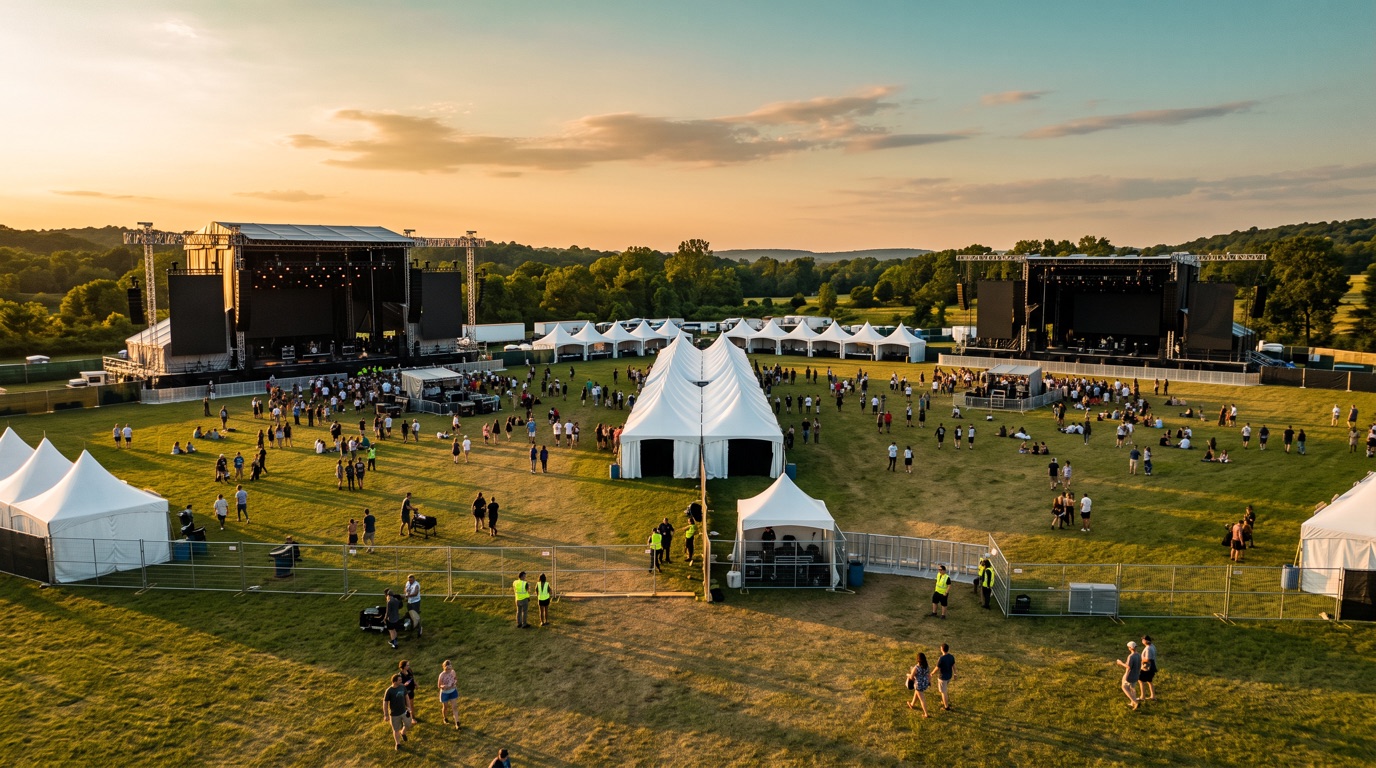
Most first-time festival organizers start with the lineup. That's the fun part, and it's the wrong place to begin. A music festival is won or lost on the order you do things in: the permit you file too late, the insurance you priced after you'd already sold tickets, the headliner deposit due nine months before a single wristband ships. Get the sequence right and a mid-size festival can become a brand that prints money for a decade. Get it wrong and you'll have a beautiful lineup poster and no legal way to open the gates.
This is the roadmap I'd hand a first-timer: what to lock first, how to size the one number that dictates every other number, and where the cash-flow trap is buried. It assumes a for-profit event of a few thousand people, not a backyard show and not Coachella. The specifics scale, but the sequence doesn't change.
The single most useful reframe is this: a festival is a fixed-cost business wearing a creative costume. The talent, the stage, the fencing, the security plan, and the insurance are all committed long before you know how many people are coming, which is exactly the same math that governs whether any live event turns a profit. A soft turnout doesn't shrink the bill. So the whole job is deciding those fixed costs carefully, then selling hard enough to clear them. Everything below serves that one idea.
How much does it cost to start a music festival?
A first mid-size festival commonly runs from the low hundreds of thousands of dollars into seven figures, and talent is almost always the largest single line. Industry guidance from festival operators puts artist fees at roughly 40 to 60 percent of total costs, with a common recommendation to cap talent at about 40 to 45 percent so production and safety don't get starved (Ticket Fairy). That one ratio is why the only real answer to "how much does it cost" is "what did you book."
Here's a workable allocation for a first-year single-day festival aimed at around 3,000 people. A modest first-year lineup usually lands a bit below that headliner-heavy 40-to-60-percent industry figure, which is why the talent row starts lower here. Treat it all as percentages, not gospel dollars, because your talent choice moves the whole table.
| Line item | Share of budget | Notes |
|---|---|---|
| Talent (artist fees) | 35 to 50% | Your anchor. Set this first, cap it deliberately. |
| Production (stage, sound, lighting) | 20 to 25% | Rentals scale with stage count and capacity. |
| Site and infrastructure | 10 to 15% | Fencing, power, water, restrooms, tents. |
| Security, medical, staffing | 10 to 15% | Ratio-driven; tighter with alcohol. |
| Insurance and permits | 5 to 10% | Non-negotiable and often underestimated. |
| Marketing | 8 to 12% | Where first-year events underspend. |
| Contingency | ~10% | The line that saves you when weather hits. |
Notice what's missing: any assumption that ticket revenue shows up in time to pay these. It doesn't, and that gap is the trap we'll get to. First, the two things that gate everything else.
Lock permits and insurance before you book a note
Permits and insurance come first because they're the only line items that can stop the whole event from happening, not just dent the margin. A public-space or private-site festival typically needs a special event or assembly permit, plus separate approvals for amplified sound, alcohol service, food handling, temporary structures, and sometimes road closures. Each has its own lead time, and some municipalities want applications 60 to 120 days out. File late and you don't get a smaller festival, you get no festival.
Insurance rides alongside. Expect to carry general liability, which for a few-thousand-person event commonly starts around a $1M-per-occurrence and $2M-aggregate level and climbs from there as capacity grows, often layered with an umbrella policy once a festival gets into the tens of thousands. Name the venue or landowner as additional insured, and add liquor liability if you're serving plus, often, a policy covering weather cancellation. Get real quotes before you finalize the budget, because insurance for a first-year event with no track record can come in higher than newcomers expect, and it's a cost you cannot pass on or cut.
Do not announce a lineup or open ticket sales until your permit path is confirmed and your insurance is bound. Selling tickets to an event you're not yet cleared to hold turns a permitting delay into refund liability, chargebacks, and a credibility hit you won't recover from in year one. The order is: site secured, permits in motion, insurance quoted, then talent, then tickets.
The talent budget is your anchor number
Once the site and permits are real, set the talent budget, and set it before you fall in love with any specific act. This is the number every other line in the table reacts to, so decide it as a business, then shop within it.
A widely used structure splits the talent budget three ways: roughly 40 to 50 percent on the headliner or headliners, 30 to 40 percent on mid-tier and rising acts that fill out the day, and 10 to 20 percent on local and emerging talent that fills early slots cheaply and builds community goodwill (Ticket Fairy). The discipline here matters more than the exact percentages. A first-timer's classic mistake is spending 70 percent of the whole budget chasing one name big enough to sell the event, which leaves nothing for the production and marketing that make that name worth seeing.
Offers go out through booking agents, usually months ahead, and they come with deposits, often around half the fee on signing. That timing is not a detail. It's the front edge of your cash-flow problem, because you're wiring real money to agents long before you've sold enough passes to cover it. Book the draw you can actually afford to pay a deposit on today, not the one you're hoping ticket sales will fund later.
Build the timeline backward from the gate
Plan on about 12 months for a first-year festival, and build the calendar backward from the day the gates open. The rough shape:
- 12 to 9 months out: secure the site and lease, start permits, get insurance quotes, set the total budget and the talent cap.
- 9 to 6 months out: send talent offers and pay deposits, lock the production vendor, confirm the headliner, finalize the site plan.
- 6 to 4 months out: announce the lineup and open your on-sale, sign sponsors, contract security and medical.
- 4 months to event: run the full marketing timeline, release later pass tiers, book staffing, finalize vendor and food operations.
- Event week: load-in, build, final walkthroughs with authorities, and door operations.
The two steps you cannot compress are permitting and headliner booking. Everything else has some give; those two have almost none. A Lineup & Performers page that lets you publish the bill as it firms up is useful here, because you can announce a phase-one lineup to open sales, then add names as they confirm without rebuilding your event page each time.
Sell in phases with multi-day passes
Open your on-sale 4 to 6 months out and sell in deliberate phases rather than one flat price for months. A festival's pricing should teach urgency: a capped first tier that visibly sells out, a second tier, then general pricing, so early buyers feel rewarded and fence-sitters feel the clock. That tier logic is the same one behind smart ticket pricing, just applied across a longer runway and, usually, across multiple pass types.
For a multi-day event, Festivals & Multi-Day Passes is the core tool: full-weekend passes, single-day tickets, and the phased tiers within each, all under one event. Layer revenue on top with Add-Ons for VIP upgrades, camping, parking, and locker rentals, which is where a lot of festival margin actually lives, since add-ons priced against a pass someone already committed to convert well. And use Ticket Holds to reserve inventory for artist guests, sponsors, and comps so those seats don't accidentally sell out from under you.
Release inventory in waves instead of dumping the full allocation at once. Holding back a block of general-admission passes for a mid-cycle "next tier" release gives you a second marketing moment and a demand read: if tier one sells out fast, you have room to price tier two higher, and if it crawls, you learn that early enough to adjust the plan instead of the day-of.
The cash-flow trap that sinks first-timers
Here's the mechanic that ends more first-year festivals than bad lineups: nearly all your big costs are due before nearly all your revenue arrives. Talent deposits, the site lease, the production booking, and insurance premiums land in the first half of your timeline. Ticket money, meanwhile, famously arrives late, with a large share of sales in the final weeks before the event. You can sell out and still run out of cash in month seven if you budgeted on paper but not on a calendar.
Three levers keep you solvent. First, sponsorship, which is the one revenue stream that can pay early: a signed sponsor can wire a check months ahead, exactly when your deposits are due, and for a for-profit festival that timing is often more valuable than the dollar amount. Second, an early on-sale with a genuinely enticing first tier, to pull ticket cash forward into the window when you actually need it. Third, a real contingency line, because weather, a dropped act, or a permit delay will cost money you didn't plan for, and the festivals that survive their first year are the ones that had a cushion when it did.
None of this makes year one a jackpot. Most first festivals break even or run thin, and that's normal, not failure. The asset you're actually building is a brand and an audience that make year two cheaper to fill, because the marketing you paid full price for this time does part of the work for free next time. Keeping more of each ticket helps that compounding: at 5 percent plus payment processing, with no monthly SaaS fee and no contract, more of every pass stays in the budget you're trying to protect. And because TickPick is a marketplace with millions of active buyers, a festival listing gets discovery on top of the audience you bring, which is demand a standalone ticketing tool simply can't generate. For an event whose whole path to profit runs through year two and year three, keeping your fee low and getting found for free are the two levers that matter most.
Frequently Asked Questions
How much does it cost to start a music festival?
A first mid-size festival of a few thousand people commonly runs from the low hundreds of thousands into seven figures, and talent is usually the single biggest line at roughly 40 to 60 percent of the total. The rest goes to production (stage, sound, lighting), site infrastructure, security and medical, insurance and permits, staffing, and marketing. Your real number depends almost entirely on the acts you book, so set the talent budget first and build everything else around it.
How long does it take to plan a music festival?
Plan on roughly 12 months for a first-year event. Permits, insurance, and the site lease come first because they gate everything else, talent offers go out months ahead through agents, and your on-sale usually opens 4 to 6 months before the gates. A compressed timeline is possible for a small event, but the two things you cannot rush are permitting and headliner booking, and both can quietly kill a festival that started them late.
How do music festivals make money?
Ticket and pass sales are the base, but the margin usually comes from everything on top: add-ons like VIP, camping, and parking, food and beverage or vendor fees, and sponsorship. Talent and production costs are largely fixed once booked, so profit is driven by how many tickets you sell against those fixed costs and how much each attendee spends once inside. Most first-year festivals run thin or break even; the money is in year two, once the brand is known and marketing works harder for free.
A music festival is a fixed-cost business, so the order of operations is the strategy. Secure the site and get permits and insurance moving before you book a single act, because those are the only costs that can make the event illegal rather than just unprofitable. Set the talent budget as your anchor and cap it deliberately (headliners, mid-tier, and local acts in roughly a 45/35/20 split), plan a 12-month calendar backward from the gate, and open a phased on-sale of multi-day passes with add-ons stacked on top. Then respect the cash-flow trap: your big bills are due long before your ticket money lands, so use sponsorship and an early tier to pull cash forward and carry a real contingency. Expect year one to break even. The profit is the brand you're building for year two.
Related Posts
How to Run a Basketball Tournament: The Gate Nobody Solves
Tournament software handles team registration. Almost nobody handles the gate, which is where the real spectator money and the real door chaos both live. Here's the ticketing playbook.
How to Organize a Food Festival: Vendors, Tickets, and Margins
A food festival's profit is set by two dials most first-timers ignore: what you charge vendors and what each attendee spends inside. Here's how to work both.
Music Festival Budget Breakdown: Real Numbers for 3,000 People
A full worked budget for a 3,000-cap single-day festival: where every dollar goes, why tickets alone rarely cover it, and the break-even math at three price points.