

Music Festival Budget Breakdown: Real Numbers for 3,000 People
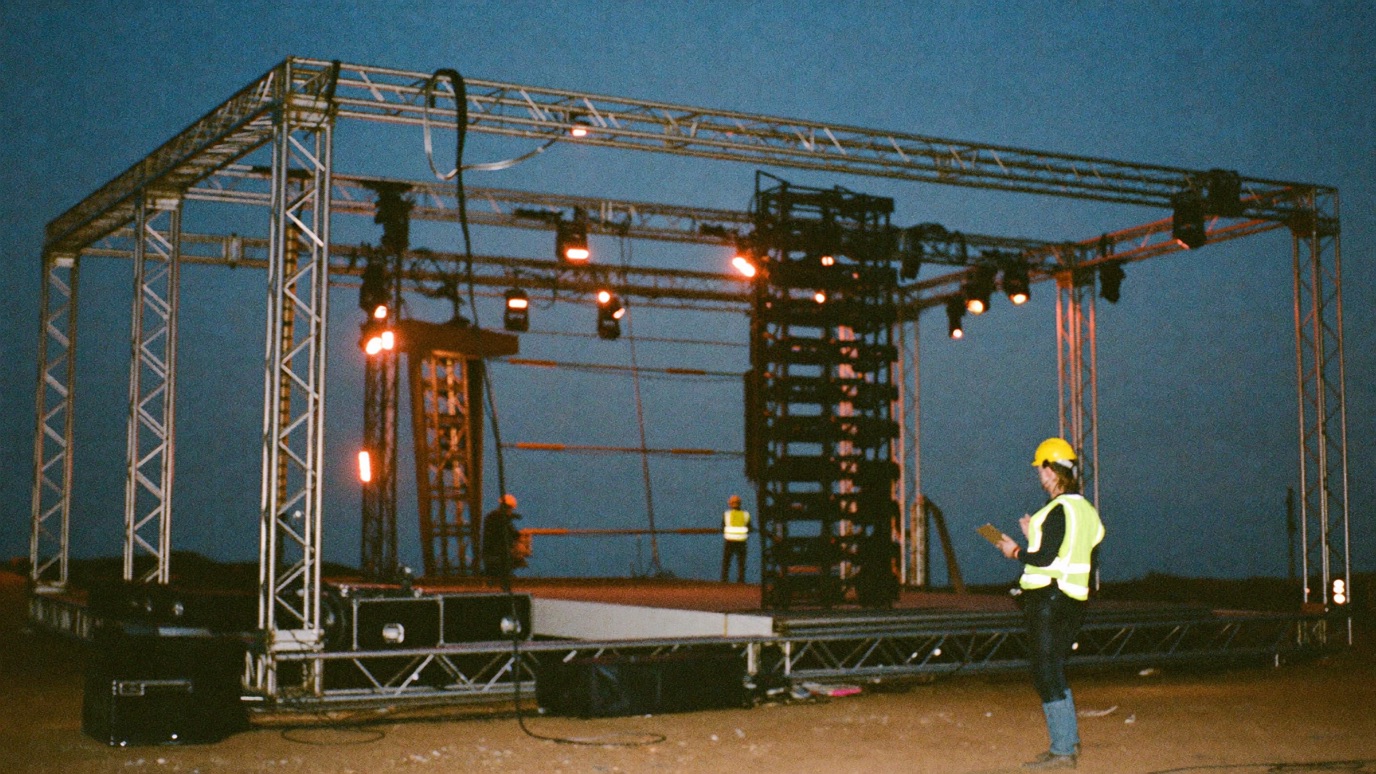
A single-day festival for 3,000 people is roughly a $360,000 bet, and the uncomfortable part is that ticket sales alone almost never cover it. Talent, the stage, the fencing, and the insurance are all committed months before you know whether anyone shows up, so the budget isn't really a spending plan. It's a fixed-cost gauntlet you have to clear before the first dollar of profit exists.
This is the numbers companion to the festival planning roadmap. That post covers the order you do things in; this one puts dollars on every line, then does the break-even math three ways so you can see exactly how much of the room you have to sell before the event pays for itself. All figures are for a for-profit, first-year, single-day event of about 3,000 capacity. Scale the dollars, but the shape of the problem doesn't change.
One reframe up front, because it governs everything below: a festival is a fixed-cost business, and fixed-cost businesses live and die on sell-through. Every empty spot in the field is pure loss, because the bill was already paid. That's the same math that decides whether any live event turns a profit, just with two more zeros on it.
How much does a 3,000-cap music festival cost?
Plan on $300,000 to $400,000 for a first-year single-day festival at this size, with talent as the biggest single line. Here's a worked budget that lands at $360,000. Treat the percentages as the durable part and the dollars as one realistic instance, because your talent choice moves the whole table.
| Line item | Share | Dollars | What it buys |
|---|---|---|---|
| Talent (artist fees) | 33% | $120,000 | The lineup. Your anchor number. |
| Production (stage, sound, lighting) | 25% | $90,000 | Stage build, PA, lighting rig, backline. |
| Site and infrastructure | 12% | $43,000 | Fencing, power, water, restrooms, tents. |
| Security, medical, staffing | 11% | $38,000 | Guards, EMTs, day-of crew. |
| Insurance and permits | 6% | $22,000 | GL policy, special-event permits, licenses. |
| Marketing | 9% | $33,000 | Ads, content, PR, promoter fees. |
| Contingency | 4% | $14,000 | The line that saves you when weather hits. |
Two things stand out if you've never built one of these. First, talent plus production is well over half the budget and both are locked in early, so more than half your money is spent before you've sold a meaningful number of tickets. Second, that contingency line is too thin. I've written it at 4 percent to match how first-year budgets actually get built, but the honest recommendation is 10 percent, which means either a bigger total or a smaller lineup. A festival with no contingency is one rainstorm away from a loss.
Talent is the biggest line, and it sets every other line
Talent is almost always the largest cost, and it's the number you decide first because everything else reacts to it. Veteran production managers say it's not unusual for 40 to 50 percent of a mid-sized festival's costs to go to artist fees, up from 25 to 30 percent a decade ago, and a common recommendation is to cap talent around 45 percent so production and safety don't get starved (Ticket Fairy). A modest first-year bill usually lands below that, which is why the worked budget puts talent at 33 percent rather than 45.
The discipline matters more than the exact percentage. Split the $120,000 roughly three ways: about half on the name that sells the event, a third on mid-tier acts that fill out the day, and the rest on local and emerging talent that fills early slots cheaply. The classic first-timer mistake is spending 70 percent of the whole budget chasing one headliner big enough to move tickets, which leaves nothing for the production and marketing that make that name worth the drive.
Booking also comes with timing you have to fund. Offers go through agents months ahead and carry deposits, often around half the fee on signing. So a chunk of that $120,000 leaves your account long before a single wristband ships, which is the front edge of the cash-flow problem we'll get to.
Where the other 65 percent goes
Everything below talent is the cost of turning a field into a venue for one day, and most of it is quoted, not guessed. Production runs 20 to 25 percent and scales with stage count, capacity, and how big a PA the headliner's rider demands. Site and infrastructure (fencing, generators, water, restrooms, tents) is around 12 percent and is easy to underestimate on a raw site with no power or plumbing. Security, medical, and day-of staffing sits near 11 percent and is ratio-driven, tighter when you're serving alcohol.
Insurance and permits look small at 6 percent but they're non-negotiable and they gate the event. A few-thousand-person festival typically carries general liability starting around a $1M-per-occurrence and $2M-aggregate level, plus liquor liability if you're pouring, and permits vary wildly by jurisdiction. Get real quotes before you finalize anything, because a first-year event with no track record can be quoted higher than newcomers expect.
Marketing is where first-year festivals quietly sabotage themselves. Nine percent, about $33,000 here, is a floor, not a target. The whole budget assumes you sell most of the room, and you don't sell most of the room on organic posts alone. Underspending marketing to protect the talent budget is how a great lineup plays to a half-empty field.
Why ticket sales alone won't get you there
Here's the part most budget guides skip: at a 3,000 capacity, general-admission tickets by themselves usually cannot cover a $360,000 budget. The room isn't big enough at a sane price. Watch what happens when you run break-even at three price points.
I'm modeling fees at about 8 percent all-in, which is TickPick Organizer's 5 percent plus roughly 3 percent payment processing, so that's what comes off gross before it lands in your account. On a higher-fee platform, more of each ticket disappears and every break-even number below gets worse.
| GA price | Net per ticket (after ~8% fees) | Break-even on tickets only | Break-even with $100K in offsets |
|---|---|---|---|
| $75 | ~$69 | ~5,220 tickets (over capacity) | ~3,770 (over capacity) |
| $110 | ~$101 | ~3,560 (over capacity) | ~2,570 (86% of the room) |
| $150 | ~$138 | ~2,610 (87% of the room) | ~1,885 (63% of the room) |
Read the "tickets only" column first. At $75 and $110, break-even is more tickets than the field holds, meaning there is no sell-through that gets you to profit on GA tickets alone. Only a $150 price breaks even on tickets, and only at 87 percent sold, which is a nervous number to bet a business on. This is the single most important thing to understand about festival economics: the ticket is the base, not the whole plan. If your model assumes tickets cover the budget, the model is wrong.
The deposits and the site build come due months before your on-sale peaks. Industry ticketing data consistently shows a majority of tickets now sell in the final weeks before an event, so you can be on pace for a sellout and still be cash-negative in month six, when the agent deposits and the stage deposit are both due. Budget the timeline of the money, not just the total. A festival that's profitable on paper can still fail because it ran out of cash in the spring.
The three levers that actually close the gap
Since tickets alone don't clear the budget, break-even is really a question of how much non-ticket revenue you can stack on top. Look at the right-hand column of that table again: adding $100,000 in offsets dropped the $110 break-even from impossible to 86 percent, and the $150 break-even to a comfortable 63 percent. That $100,000 is the whole game, and it comes from three levers.
- Sponsorship. The best festival margin lever, because it offsets fixed costs directly instead of depending on attendance. A single stage sponsor, a beverage partner, and a few local activations can be worth $40,000 to $80,000 on an event this size. Package tiers and deliverables cleanly rather than chasing one-off logo placements.
- Add-ons. VIP upgrades, camping, parking, and locker or cabana rentals convert well because you're selling to someone who already committed to a pass. Add-ons carry almost no new fixed cost, so a high share of that revenue drops straight to the bottom line.
- Blended ticket price. You won't sell one flat GA price. Phased tiers and a real VIP band pull your average ticket price above the GA number in the table, which lowers break-even without raising the sticker price everyone sees first.
Sponsorship is worth the most work because it's the only revenue that doesn't care about your turnout. Model it conservatively (signed money only, not pipeline) and treat it as a reduction of your fixed costs. If you've never built a sellable package, the mechanics are in the event sponsorship packages guide. On the platform side, Sponsors tools let you track partners and their deliverables against the event so nothing you promised for the money slips.
Price add-ons against the pass, not against your costs. A $200 VIP upgrade next to a $110 GA reads as a small step up for a much better day, and it can carry a 60-to-80 percent margin because the incremental cost of a shaded viewing deck and a separate bar is tiny relative to what people pay for it. On a 3,000-cap event, converting even 8 percent of buyers to a $200 upgrade is $48,000, most of it profit.
Watch break-even in real time, not at settlement
Once the budget is set, your one job is to know where you stand against break-even every single day, not to find out at final settlement. Put the break-even ticket count on a whiteboard and track sales against it. Festivals & Multi-Day Passes handles the tiered passes and add-on inventory, and the Analytics Dashboard shows sell-through pace so you can tell a slow week from a normal back-loaded curve before you panic and discount.
Cash timing is the other half. The Payouts Dashboard shows what's actually landed and when, which matters more than gross sales when you owe a production deposit next week. The revenue on your sales report is not the cash in your account, and confusing the two is how organizers who "sold well" still bounce a vendor payment. Track the money's calendar as carefully as its total.
And price the whole thing with intent from day one. The break-even table swings enormously on that GA number, so setting it from break-even and comps rather than a gut feel is the highest-leverage hour you'll spend. Work through how to price event tickets before you open a single tier, because a $10 mistake on a 3,000-cap room is $30,000 of margin you either found or gave away.
FAQ
How much does a small music festival cost?
A single-day festival for around 3,000 people commonly runs $300,000 to $400,000 all in, with talent as the largest line at roughly a third of the total. Below a thousand people you can run one for well under $100,000, but the per-attendee cost climbs because fixed costs like insurance, a stage, and permits don't shrink much with the crowd. Your real number is set almost entirely by who you book.
What is the biggest cost in a festival budget?
Talent. Artist fees are usually the single largest line, commonly 30 to 50 percent of a festival's total budget, and they're the number every other line reacts to. Production (stage, sound, lighting) is typically second at 20 to 25 percent. Because both are committed long before you know your turnout, they behave as fixed costs, which is what makes festival margins fragile.
How many tickets does a festival need to sell to break even?
It depends on price and on how much non-ticket revenue you bring in. For a $360,000 budget at a $110 general-admission price, tickets alone would need to cover more than the whole 3,000-cap room, so you can't break even on tickets at that price. Add roughly $100,000 in sponsorship and add-on revenue and break-even drops to about 2,570 tickets, or 86 percent of the room. Push price and non-ticket revenue further and it drops into the 60s.
Should I pass ticketing fees to buyers or absorb them?
For a fixed-cost event this size, pass them. Absorbing an 8 percent fee on a $110 ticket is roughly $9 off every sale, which across a few thousand tickets is real money against a thin margin. Most festival buyers expect fees at checkout, so passing them is standard and keeps your break-even math clean. This is also where a lower platform fee compounds: at 5 percent plus processing rather than a double-digit rate, more of every ticket clears to you whether you pass fees or eat them.
Related Posts
How to Organize a Music Festival: A First-Timer's Roadmap
The order you do things in decides whether a festival makes money. Permits and insurance first, talent budget as your anchor, phased on-sales, and the cash-flow trap that sinks first-timers.
How to Build an Email List That Sells Out Events
Your email list is the only sales asset you keep when a platform changes its terms. Here's how to build one from every visit, order, and door interaction.
How to Stop Scalpers at Your Event
You can't make an event scalper-proof, but you can make your tickets a bad target. Here's what actually works, from a company that grew up in resale.