

How to Host a Paid Tailgate Event: Parking and Profit
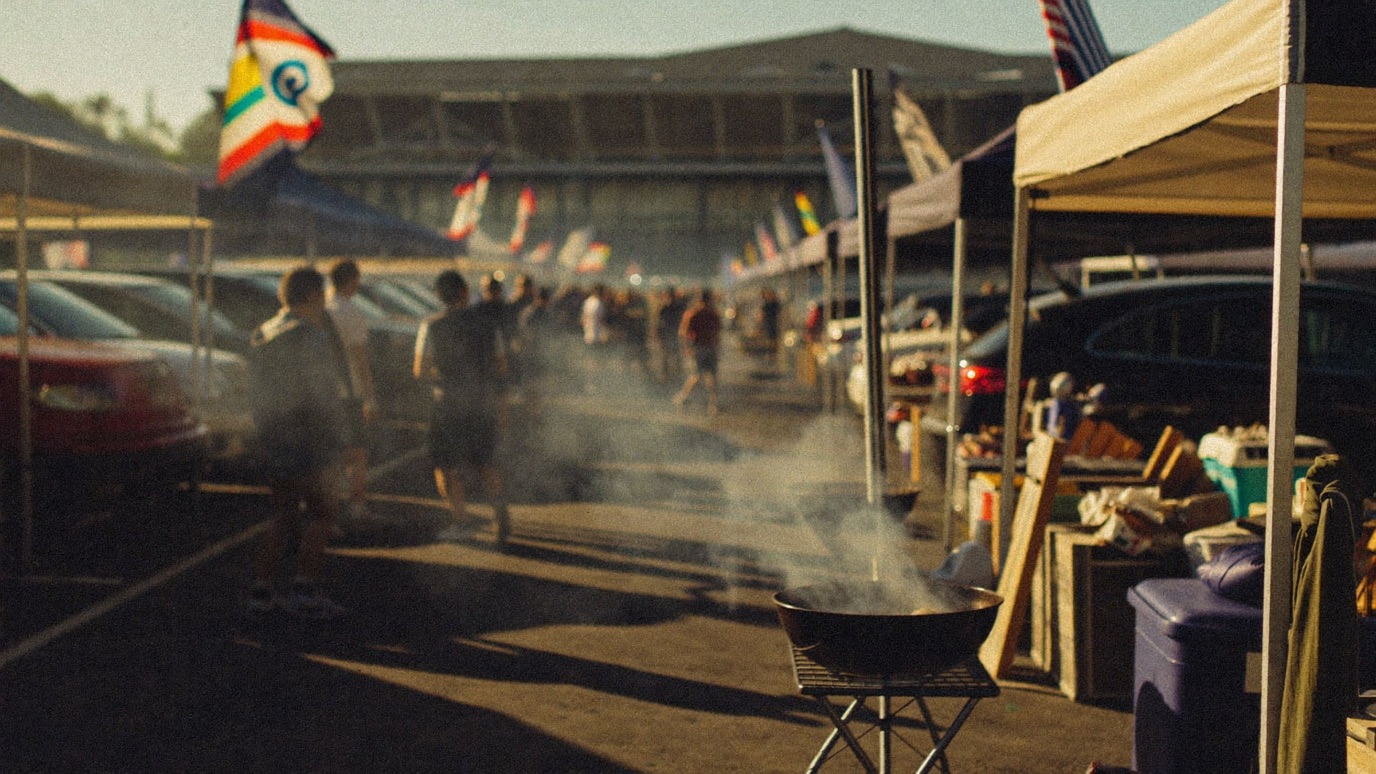
A paid tailgate is a parking business wearing a party costume. Strip away the grills and the cornhole and the DJ, and what you're actually selling is a space near a stadium for a few hours on a day when parking is scarce and demand is guaranteed by the schedule. The party is what lets you charge more than a parking garage. But the schedule is the asset, and the lot is the whole game.
Get that framing right and the economics get clear fast. Tens of millions of Americans tailgate every football season, and they already spend real money doing it: a full setup, a cooler, food for the group, the works. You are not creating the behavior, you are charging admission to a better version of it. The mistake first-timers make is treating the entry pass as the product and the food as a nice-to-have. It's the reverse. The pass gets them in the gate; the add-ons are where you actually make money.
So this is the operator's model for a for-profit tailgate: how to lock down a lot, what to charge per vehicle and per head, how to handle the alcohol question without a fine, a full worked P&L for one home game, and then the move that turns a single Saturday into a season of them.
Can you charge for a tailgate party?
Yes, but only on a space you control, and only after you've cleared the local rules. That's the entire legal foundation, and it's where most would-be tailgate operators trip.
You cannot set up a paid tailgate in a public stadium lot you don't control, or in a lot the venue already runs. What you can do is lease private land near the stadium, get written permission from the owner, and turn it into a ticketed event space for the day. From there you need the same paperwork any public event needs: a special-event permit from the city, a vendor or food permit if you're serving, and event liability insurance with the lot owner named as additional insured. None of it is exotic. All of it needs to be in hand before you sell a single pass, because a shut-down tailgate on game morning is a refund list and a reputation you don't get back.
The lot is the whole business
Everything about a paid tailgate flows from the lease. Secure the right lot at the right price and the event almost runs itself; get greedy on capacity or careless on the contract and no amount of programming saves it.
Location is the first lever. A lot you can walk from to the gate in five minutes prices completely differently from one a fifteen-minute hike away, and fans will pay a premium to avoid the walk with a cooler. Capacity is the second. Know your real vehicle count, leave room for the tents and the walking lanes and the emergency access the fire marshal will ask about, and never sell to the theoretical maximum. The lease itself is the third: lock a per-game rate or a season rate in writing, confirm who's liable for damage to the asphalt, and get the alcohol and amplified-sound terms spelled out before money changes hands.
The reason this matters so much is that the lease is a fixed cost. You pay for the lot whether you fill it or not, exactly like the fixed license fee that governs a ticketed watch party's margin. Sell 150 of 150 spots and the night is a strong profit. Sell 80 and the lease, the staff, and the DJ cost the same while your revenue nearly halves. Sell-through against a fixed capacity is the whole game, which is why you price and promote a tailgate to fill the lot, not to maximize the sticker on any one pass.
What to charge: the pass, the parking, and the add-ons
Price the tailgate as a bundle, then stack margin on top with add-ons. The anchor product is a single pass that includes one parking space and entry to the tailgate zone for the people in the car. That's the thing fans understand and compare against just parking and walking in cold.
For a promoted, programmed tailgate near a stadium, that parking-plus-entry pass generally runs 40 to 100 dollars per vehicle, scaling with the game and the walk to the gate. The comparison points are public: colleges sell plain season tailgate parking passes from roughly $125 for a full season at smaller programs up to $300 at others, and premium single-game reserved spaces run $40 and up per space (per Air Force, Franklin Pierce, and Maritime College athletics pages in recent seasons). Those are bare parking spots with no party attached. A single marquee game with a DJ, tents, games, and food service supports a real per-vehicle price on top of that.
The pass gets you to break-even. The add-ons get you paid. Sell food-and-drink packages, premium tent or RV spots with a better location and more square footage, and extras like reserved cornhole lanes or a covered VIP area. This is the same two-machine dynamic that drives VIP tiers and add-ons at any event: the premium spots reprice a small slice of your best real estate, while the food-and-drink packages have no capacity ceiling and attach to anyone who wants them. Selling those upgrades cleanly is exactly what event add-ons like parking passes and food bundles are built for, so a buyer picks a spot and a meal package in one checkout instead of paying three different people in the lot.
Run the math both ways. Per vehicle, you're capturing 60 dollars for the pass plus whatever the car's occupants add on. Per head, at roughly three people per car, an all-in average of 30 to 40 dollars per person is a realistic target once add-ons are working. Track both numbers, because per-vehicle tells you if the lot is priced right and per-head tells you if the add-ons are.
The alcohol question
Alcohol is the single biggest compliance decision at a tailgate, and there's no casual way through it. Serving or selling alcohol at a paid event almost always requires a temporary alcohol permit, a licensed caterer, or a contracted bar service, and the rules vary sharply by state, county, and even by the specific lot. Open-container ordinances that let a private group drink in a stadium lot on game day do not automatically let you sell drinks to a paying crowd.
There are two clean paths. The first is a BYOB lot: fans bring their own, you sell only food and non-alcoholic drinks, and you post clear rules about glass, coolers, and cutoff. This is the lower-risk model, and for a first event it's the one I'd run. The second is selling alcohol yourself, which means the permit, trained and certified servers, ID checks, and a liquor-liability insurance rider that costs meaningfully more than a dry event's policy. It can be worth it, because a bar is high-margin, but only once your volume justifies the overhead and you've got someone who actually knows the local code running that side.
Do not improvise the alcohol piece. Selling without the right permit is exactly the kind of violation that gets an event shut down mid-day and the organizer personally fined, and it can void your insurance if an incident happens. If you're not certain your setup is compliant, run a BYOB lot and sell food until you've confirmed the rules in writing with your city and your insurer.
What a home-game tailgate actually nets
Here's an illustrative P&L for one home game on a leased lot with room for 150 vehicles, selling out at an average of three people per car for about 450 attendees. Your numbers will move with your market, but the shape holds.
| Line item | Amount |
|---|---|
| Tailgate + parking passes (150 × $60) | $9,000 |
| Food & drink add-on packages (180 × $25) | $4,500 |
| Premium tent / RV spots (10 × $150) | $1,500 |
| Total revenue | $15,000 |
| Lot lease (game day) | ($2,500) |
| Permits and event insurance (per-game share) | ($800) |
| Staff and security | ($2,000) |
| Entertainment and rentals (DJ, tents, games) | ($1,500) |
| Food & drink cost of goods (~40%) | ($1,800) |
| Marketing | ($700) |
| Platform fee (5%, absorbed) | ($750) |
| Payment processing (~2.9% + $0.30/order) | ($480) |
| Net profit | $4,470 (≈30%) |
Thirty percent on a Saturday, and notice where it comes from. The passes alone, at $9,000 against roughly $10,500 in costs, don't clear the event. It's the $6,000 in add-ons and premium spots that turns a break-even parking lot into a real margin. That's the lesson worth tattooing on every tailgate operator: the entry pass fills the lot, the add-ons pay you. Now look at the lease line and the staff line, because they don't move when the lot is half full. Sell 80 vehicles instead of 150 and revenue falls by more than the costs do, and your comfortable 30 percent becomes a rounding error. Fixed costs lock in before the crowd shows, so the only real question every game is how full you get the lot.
Turn one tailgate into a season
One sold-out tailgate is a good Saturday. The home schedule turns it into a business, and this is the part that makes the format worth building around. A college football team plays six or seven home games a season, and every one of those dates is a tailgate you already know is coming, in the same lot, for the same fans. That's a gift most event formats never get.
So stop selling single Saturdays and sell the season. A season pass covering every home game pulls cash forward before your first kickoff, locks in your regulars against the operator across the street, and gives you a committed base to price the lease against. This is the same retention flywheel that makes a recurring series beat a string of one-offs: your first tailgate is expensive to fill because nobody knows it exists, but by game four the regulars have their spot, their group chat does your promotion, and the lot partly fills itself. Acquisition costs far more than keeping the fans you already earned, so every game you run makes the next one cheaper.
Two operational pieces make the season play real instead of aspirational. The first is a gate that moves. Tailgaters come early, but they don't trickle in evenly: cars stack up in a surge the moment the lot opens and again in the couple of hours before kickoff, and a slow gate turns that surge into a line spilling onto the road. Fast QR check-in that scans a pass in a second keeps cars flowing, and it blocks the screenshot-sharing trick so your scanned count matches what you sold. The second is capturing the walk-up demand that always materializes: run last-minute vehicles through proper box office and door sales with tap-to-pay on a phone, so a card sale at the gate lands in the same numbers as an online order and your capacity count stays honest against the lease.
The last piece is the fee you pay across a whole season of dates. At 5 percent plus payment processing, with no monthly SaaS fee and no contract, more of every pass and every add-on stays with you on game one and game seven alike. And because TickPick is also a marketplace with millions of active ticket buyers, a rivalry weekend or a playoff game can pick up discovery from fans searching for something to do, on top of the regulars you bring yourself. For a format whose entire edge is running the same event on the same lot all season, paying a flat monthly fee and sourcing 100 percent of your own demand is the wrong deal.
Frequently Asked Questions
Can I charge for a tailgate party?
Yes, as long as you control the space and clear the local rules. That means a lot you own or lease with the owner's written permission, the special-event and vendor permits your city requires, and event liability insurance. You cannot charge admission to a public lot you do not control, and selling alcohol needs its own license on top of everything else. Once you have the space locked and the permits in hand, selling parking-plus-entry passes and add-ons is a normal, legal business.
How do paid tailgates work?
You lease a lot near a stadium for the day, then sell a pass that bundles a parking space with entry to a tailgate zone you program with a DJ, games, tents, and food. Fans buy the pass online in advance, you scan them in at the gate, and you upsell food-and-drink packages and premium spots on top. The parking pass is the anchor product; the add-ons are where the margin lives.
How much do tailgate tickets cost?
For a promoted, programmed tailgate, a parking-plus-entry pass usually runs 40 to 100 dollars per vehicle depending on the game and how close you are to the gate, with premium RV or tent spots going higher. As a reference point, colleges sell plain season tailgate parking passes from roughly 125 to 300 dollars for a whole season, so a single marquee game with real programming supports a healthy per-vehicle price.
Do I need a license to sell alcohol at a tailgate?
Yes. Serving or selling alcohol at a paid event almost always requires a temporary alcohol permit or a licensed caterer or bar service, and the rules vary sharply by state and city. Many operators sidestep the risk by running a BYOB lot, where fans bring their own and you sell only food and non-alcoholic drinks. If you do sell alcohol, budget for the permit, trained servers, and the higher insurance a liquor-serving event requires.
A paid tailgate is one of the cleaner margin plays in live events, because the schedule hands you guaranteed demand and someone else built the stadium. Win it by treating the lot as the whole business: lease the right space near the gate, get the permits and insurance in hand before you sell, and price the parking-plus-entry pass to fill capacity rather than to maximize any single ticket. Then make your money on the add-ons, run a BYOB lot until selling alcohol is worth the overhead, and sell the season instead of the Saturday so a string of home games compounds into a business.
Related Posts
How to Run a Basketball Tournament: The Gate Nobody Solves
Tournament software handles team registration. Almost nobody handles the gate, which is where the real spectator money and the real door chaos both live. Here's the ticketing playbook.
How to Host a Ticketed Watch Party: World Cup to Fight Nights
A watch party is one of the highest-margin events you can run, because someone else made the content. The catch is broadcast rights. Here's the licensing, the revenue model, and the season-long play.
How to Build an Email List That Sells Out Events
Your email list is the only sales asset you keep when a platform changes its terms. Here's how to build one from every visit, order, and door interaction.